
Best Floating Wall Mounted TV Cabinet with Display Shelves: 7 Buying Tips
Introduction
A floating wall mounted TV cabinet with display shelves is one of the smartest ways to create a clean, organized entertainment area while saving valuable floor space. If you’ve ever stood in your living room trying to figure out what to do with that big blank wall behind the TV, you’re not alone. Many homeowners want their TV area to look stylish and well-organized without filling the room with bulky furniture or leaving cables visible.
This is where floating wall mounted TV cabinets with display shelves come into the conversation. Within this category, models with open display shelves have become increasingly popular—not just because they look modern, but because they offer a practical combination of storage, display space, and a clutter-free appearance.
In this guide, we’ll take a closer look at one such unit, exploring its design, shelf layout, dimensions, storage options, and installation considerations. By the end, you’ll have a better understanding of whether this style of TV cabinet is the right choice for your living room and what to check before making a purchase.
What Is a Floating Wall Mounted TV Cabinet?
Put simply, it’s a TV storage unit that mounts directly onto your wall instead of sitting on legs on the floor. There’s no base touching the ground — the whole thing appears to “float,” which is where the name comes from.
How It Differs from a Traditional TV Console
A traditional console sits on the floor, usually with doors or drawers, and takes up a decent footprint in the room. A floating unit skips all of that. Because there are no legs and no floor contact, you get a visual gap between the unit and the floor, which makes even a fairly wide cabinet feel lighter and less crowded. It also means you can clean the floor underneath without shifting furniture around, which sounds minor until you’re the one vacuuming.
Who This Style Works Best For
I usually recommend this style to two kinds of people. First, anyone in a smaller apartment or a room where floor space is genuinely tight — every square foot you don’t lose to furniture legs matters. Second, people who like a more open, gallery-style display for their décor rather than hiding everything behind cabinet doors. If you enjoy having a few framed photos, a small showpiece, or a plant visible rather than tucked away, open shelving suits that habit naturally.
If you’re someone who prefers everything hidden behind closed doors — no visible clutter, no dust on open surfaces — this style will need a bit more thought, and I’ll get into that later in the cons section.
Product Overview
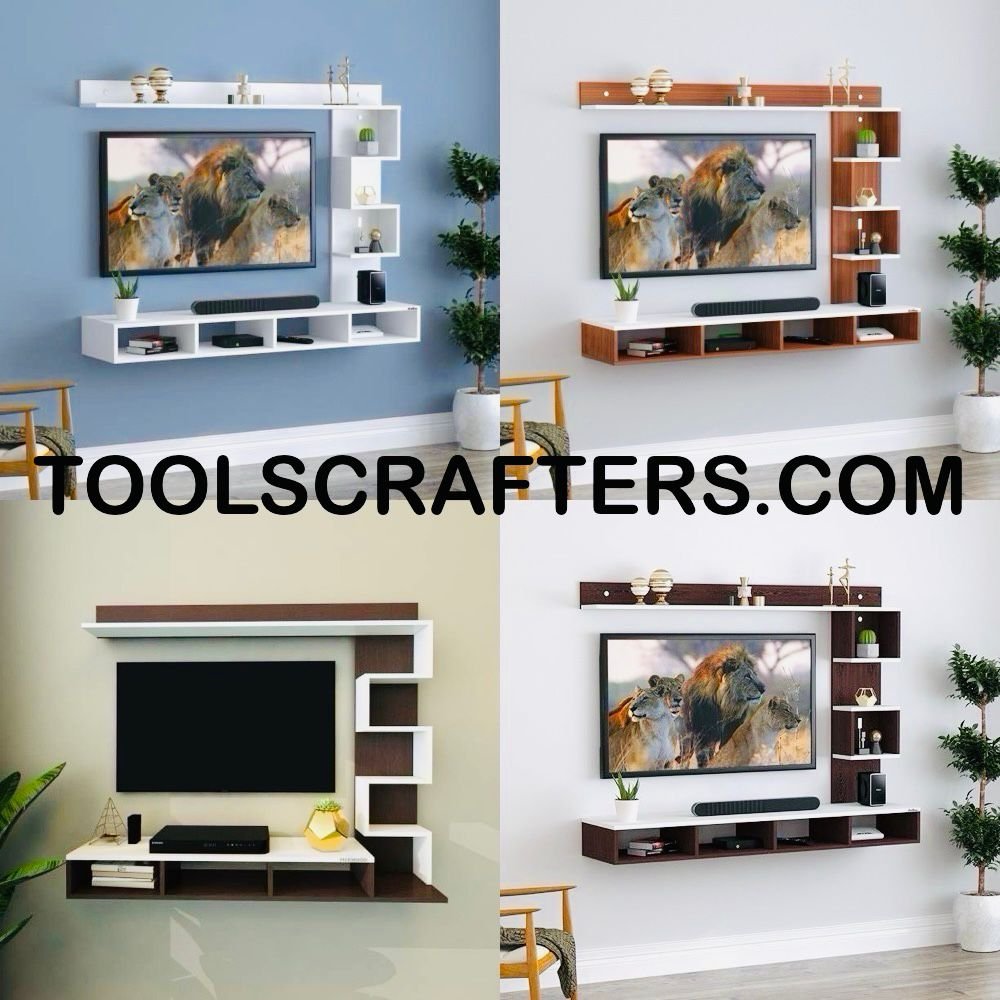
This particular unit is a two-part wall-mounted design: a horizontal top shelf paired with a tiered side column of shelves, and a separate floating console mounted lower down for the TV and everyday storage. The wood-grain finish runs through most of the panels, with white used for the shelf edges and the console top, giving it a clean two-tone look rather than one solid block of colour.
It measures 120 cm in width, 115 cm in height, and 25 cm in depth — so it’s a mid-size unit, not something oversized for a modest living room wall, but also not a tiny accent piece. The layout is fully open — there are no cabinet doors or drawers anywhere on the unit, which is worth keeping in mind before you buy, especially if concealed storage matters to you.
I’ll be upfront about something: the material type and the exact weight capacity aren’t specified on the listing I reviewed. If either of those matters to your decision — and for a wall-mounted piece, they should — it’s worth asking the seller directly before you commit. I’d rather tell you that clearly than guess and have you find out the hard way after installation.
Design & Layout
The Long Top Display Shelf
Running across the top of the unit is a single long shelf, spanning close to the full width of the piece. In the reference image, this shelf was used to display a mix of small decorative items — a trophy-style ornament, framed photos, a small model, and a few other collectibles. It’s a good spot for things you want visible but not in constant use — the kind of items you’d put on a mantelpiece if you had one.
The Tiered Side Shelf Column
To the side of the main wall panel, there’s a vertical column of three shelves arranged in a staircase pattern — each one stepping down slightly from the one above it. This isn’t just decorative; it breaks up what would otherwise be a very flat, rectangular layout, and it gives you distinct “slots” for individual items rather than one long surface where things blend together. In the example shown, this column held a small globe, a decorative object, and a model figure — each shelf doing its own visual job.
The Floating Bottom Console with Open Cubbies
Below the main wall section sits the floating console — this is where the TV itself would typically be mounted above, with the console handling day-to-day equipment underneath. It’s divided into four to five open cubby compartments rather than one continuous open shelf. In practice, that division is genuinely useful: it stops your soundbar, router, and set-top box from all sliding into one messy pile, and gives you a natural spot for each device.
Two-Tone Wood-Grain and White Finish
The finish pairs a warm wood-grain tone on the main panels with white on the shelf edges and console top. This combination does a good job of keeping the piece from feeling too heavy or dark on the wall, especially if your walls are a lighter neutral colour. If your room already leans toward warm wood tones — flooring, doors, other furniture — this finish will blend in naturally rather than fighting with the rest of the space.
Dimensions & Space Requirements
120cm Width — Wall Space Planning
Before anything else, measure your wall. You need a clear 120 cm of width, and I’d suggest giving yourself a bit of breathing room on either side rather than mounting it edge-to-edge with corners or door frames. A unit that’s crammed into a space with nothing to spare tends to look cramped even if it technically fits.
25cm Depth — Fit for Small Rooms
At 25 cm deep, this is a shallow profile compared to a traditional floor-standing console, which typically runs deeper. That shallow depth is exactly why floating units work so well in smaller rooms — you’re not losing much room depth-wise, even with the TV mounted and a soundbar sitting on the console. If you’re tight on space between your seating and the TV wall, this is one of the bigger practical advantages of going with a floating design.
115cm Height — Clearance Above and Below
The full unit spans 115 cm from the top shelf down to the base of the console. When you’re planning the mounting height, think about your typical seated eye-line to the TV, not just where the unit “looks right” on the wall. I’d suggest sitting on your sofa and having someone hold a large piece of cardboard at a few different heights before you finalise where the bracket line goes — it’s a five-minute exercise that saves you from a TV mounted too high, which is a very common regret.
Storage & Display Options
Using the Open Cubbies
The console’s open cubbies are genuinely practical for the small electronics that tend to pile up around a TV setup — a set-top box, a router, a soundbar, or even a stack of magazines or a games console. Because each cubby is a separate compartment rather than one long open shelf, you can keep devices from bumping into each other, which also makes it easier to reach the right remote or cable without digging through a jumble.
One practical note: since there are no doors, ventilation for warm-running devices like a set-top box or router is actually a small plus here — closed cabinets can trap heat, while open cubbies let it dissipate naturally.
Styling the Display Shelves Without Clutter
The top shelf and side column are where the personality of the piece really comes through, but it’s easy to overdo it. My advice: pick a handful of items — three to five per shelf, not more — and vary their height and shape rather than lining up similar-sized objects in a row. A tall item, a framed photo, and one smaller object on a shelf will look far more intentional than five similar-sized trinkets crowded together.
Installation Tips
Wall Type and Weight Considerations
Because this is a fully wall-mounted piece with no floor support, your wall type matters more than almost anything else in this decision. Drywall alone, without hitting studs, generally isn’t enough to safely support a unit like this once you add a TV, soundbar, and décor items. If you’re on drywall, you’ll want to locate studs or use appropriate wall anchors rated for the combined weight. On brick or concrete walls, you’ll need masonry-rated fixings rather than standard wall plugs.
I’d also flag again that the exact weight capacity for this unit isn’t listed in the material I reviewed — before you buy, ask the seller for that figure directly, and make sure it comfortably covers your TV’s weight plus whatever you plan to store on the console and shelves.
Planning Cable Routing
Since this is an open-shelf design rather than an enclosed cabinet, cables won’t be hidden behind doors the way they would with a closed unit. If a clean, cable-free look matters to you, plan on running cables through a wall channel or a cord cover before the unit goes up — it’s much easier to sort this out during installation than to retrofit it afterward.
DIY vs. Professional Installation
If you’re comfortable with a stud finder and a drill, and your wall is straightforward drywall over timber studs, this is a reasonable DIY project for someone with basic tools and a bit of patience. If you’re dealing with concrete, brick, or you’re mounting a particularly large TV, I’d lean toward getting a professional installer in — the cost is small compared to the risk of a heavy unit coming loose from the wall.
Pros
– Frees up floor space, especially useful in smaller living rooms
– Shallow 25 cm depth keeps the room feeling open
– Tiered side shelving adds visual interest instead of one flat surface
– Divided console cubbies keep electronics organised and separated
– Two-tone finish suits a range of neutral and warm-toned interiors
– Open shelving allows natural airflow around electronics
Cons
– No doors or drawers, so items and cables stay visible
– Requires proper wall anchoring — not ideal for weak or hollow walls without reinforcement
– Weight capacity isn’t clearly stated, so it needs confirming before purchase
– Material type isn’t specified, which matters for long-term durability
– Dust and everyday clutter will be more visible than with closed storage
Buying Guide
1. Measure your wall space first. You need a clear 120 cm width and 115 cm height, with some margin either side so the unit doesn’t feel boxed in.
2. Check the depth fits your setup. At 25 cm, it’s shallow — good for tight rooms, but make sure your TV bracket and soundbar still sit comfortably on the console.
3. Be honest about how much you want hidden. This is an open-shelf design. If you want everything out of sight, this may not be the right fit — a closed-cabinet unit would suit you better.
4. Plan your display pieces in advance. Know roughly what you’ll put on the top shelf and side column before it’s mounted, so you’re not scrambling to fill empty shelves later.
5. Confirm the weight capacity with the seller. This is the one detail I’d insist on getting in writing before buying, especially if you’re mounting a larger TV.
6. Ask whether a TV mounting bracket is included. Some floating units come with one, others expect you to buy it separately — worth knowing before installation day.
7. Match the finish to your existing furniture. A wood-grain and white combination works well with most neutral rooms, but hold a sample or photo against your wall colour if you can before deciding.
8. Get quotes for professional mounting if needed. Especially on concrete or brick walls, factor this into your total budget upfront rather than as an afterthought.
FAQ
1. What size TV fits this 120cm wide floating cabinet?
The unit’s wall panel is sized to accommodate a mid-size TV comfortably, but the exact maximum size will depend on your specific TV’s mounting bracket and VESA pattern. It’s best to check your TV’s bracket compatibility against the wall panel dimensions before buying.
2. Does this floating TV unit come with a wall mount bracket?
This isn’t specified in the product details I have access to. Confirm directly with the seller whether a TV bracket is included or needs to be purchased separately.
3. How much weight can the display shelves hold?
The listed weight capacity isn’t confirmed. For a wall-mounted piece like this, I’d always recommend getting this figure from the seller in writing, especially if you plan to display heavier decorative items.
4. Is the open cubby storage a good option if I want to hide cables?
Not entirely on its own — since there are no doors, cables will be somewhat visible. Using a cord cover or routing cables through the wall during installation will give you a much cleaner result.
5. What is this floating TV cabinet made of?
The exact material isn’t specified in the information available. It’s worth asking the seller directly, as this affects both durability and how the unit should be cleaned and maintained.
6. Is 25cm depth enough for a soundbar and set-top box?
Generally yes for standard-sized accessories, but it’s worth measuring your specific soundbar and any other equipment against the 25 cm depth before buying, particularly if you have a larger soundbar model.
Final Thoughts
A floating wall mounted TV cabinet with open display shelves isn’t the right choice for everyone — if you want everything hidden away behind closed doors, you’ll likely be happier with a different style. But if you’re working with a smaller room, you like having a bit of your personality visible on the wall, and you don’t mind a little extra thought going into cable management, this kind of unit does its job well. The tiered shelving in particular is a nice touch — it turns what could be a plain rectangle of storage into something that actually has some shape and character on the wall.
Before making your purchase, we recommend confirming the product specifications with the seller, measuring your wall space carefully, and planning the installation in advance. These simple checks can help you choose a TV cabinet that fits both your space and your needs.
Affiliate Disclosure
This article may contain affiliate links. If you choose to purchase through one of these links, TOOLSCRAFTERS may earn a small commission at no additional cost to you. All opinions and recommendations in this guide are based on our own review of the product’s visible design and features.
About TOOLSCRAFTERS
The TOOLSCRAFTERS Editorial Team creates practical buying guides, furniture reviews, and DIY resources to help homeowners make informed decisions. Every guide focuses on real-world usability, accurate product information, and long-term value instead of promotional claims.