
Best Drill Accessories Every DIYer, Carpenter & Technician Should Own
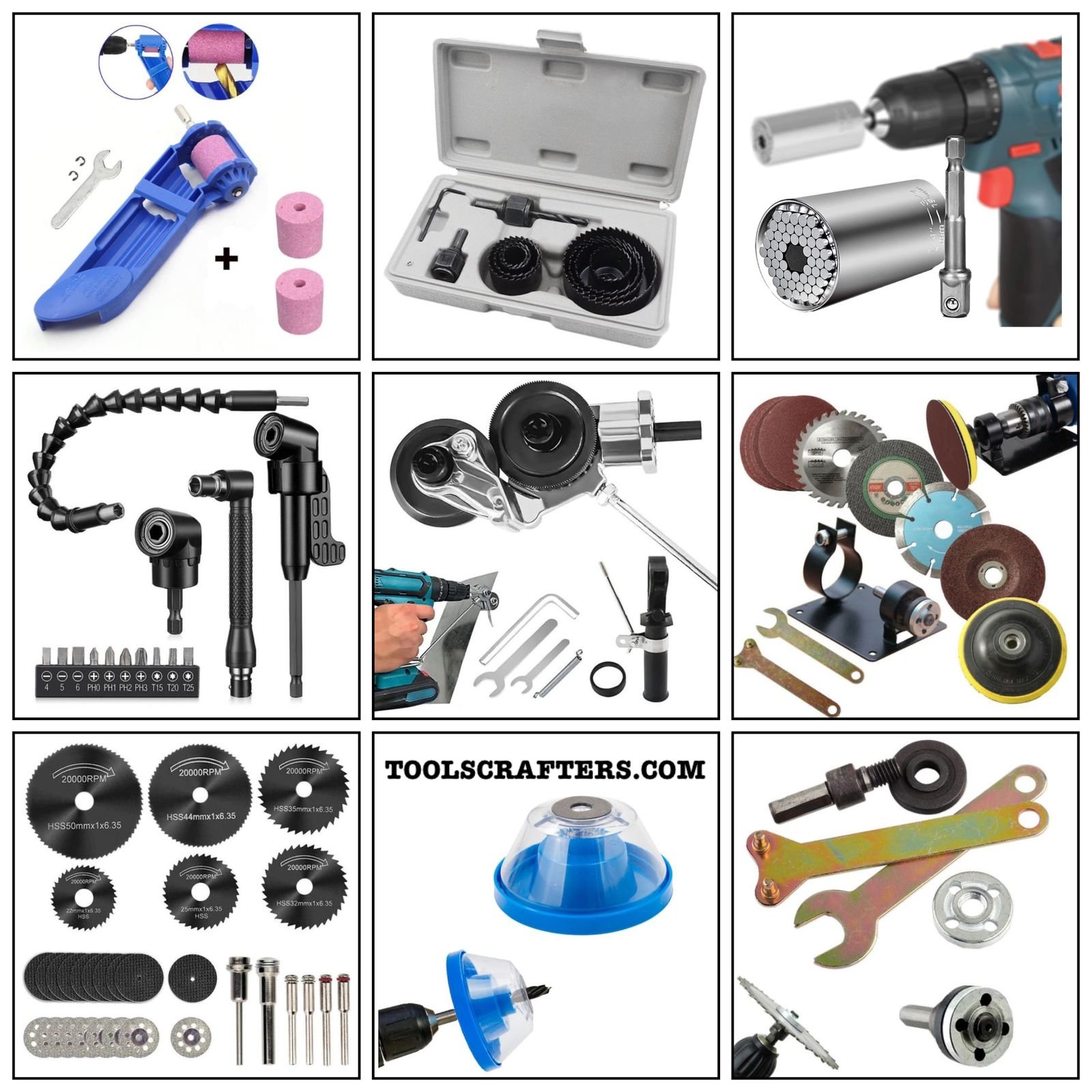
Best drill accessories can turn a simple power drill into a much more versatile tool. With the right attachments, a drill can handle tasks like cutting, sanding, polishing, sharpening, and drilling clean holes without needing a separate machine for every job. A drill is usually the first power tool anyone buys… and for a lot of people, it stays the only one for years. That’s not a bad thing — a drill with the right accessories can cover jobs that would normally need a jigsaw, a grinder, a socket set, and a dedicated hole saw machine sitting in separate cases around the shop. I’ve built up a small collection of these attachments over the years, partly out of curiosity and partly because I got tired of hauling five tools to a job that only needed one drill and the right add-on.
What I want to do here is walk through ten accessories that actually earn their place in a toolbox, based on using them on real jobs — drilling into ceilings, cutting sheet metal on a roof, assembling flat-pack cabinets, sharpening bits that had gone dull months ago. None of these turn a drill into a full replacement for a dedicated machine. Some come close for certain tasks. Others are decent for occasional use and frustrating if you lean on them too hard. I’ll tell you which is which.
One thing worth saying up front: specifications on these attachments vary a lot between manufacturers. A universal socket that grips 7–19mm fasteners from one brand might have a slightly different range from another. A hole saw set rated for wood might cut thin sheet metal in one version and not in another. I’m not going to pretend there’s one universal spec sheet that applies to every product with the same name — check the actual listing for the model you’re buying.
Every accessory in this guide has either been used in my workshop or carefully evaluated based on practical woodworking and maintenance applications.
The best drill accessories aren’t always the most expensive ones. The right choice depends on the type of work you do and how often you use your drill.
Quick Overview: What to Buy and What to Skip
| Accessory | Best For | Skip If | Skill Level |
|—|—|—|—|
| DIY Electric Saw Attachment | Occasional plywood/MDF cuts | You cut wood daily | Beginner |
| Drill to Grinder Adapter | Light sanding, polishing, thin rod cutting | You do regular metal fabrication | Beginner–Intermediate |
| Drill Dust Collector | Wall/ceiling drilling, contractor work | You drill rarely | Beginner |
| Mini Circular Saw Blade Set | Tight-space precision cuts | You need structural lumber cuts | Intermediate |
| Drill Stand Support Base | Repetitive light bench work | You need heavy-duty fabrication | Beginner–Intermediate |
| Metal Nibbler Attachment | Sheet metal, GI sheet, ductwork | Thick metal, high-volume cutting | Intermediate |
| Flexible Bit & Right Angle Set | Cabinets, tight corners, appliances | Heavy torque driving | Beginner–Intermediate |
| Universal Socket Tool | Quick repairs, mixed fastener sizes | Torque-critical fastening | Beginner |
| Portable Drill Bit Sharpener | Restoring dull bits | Bits are already badly damaged | Intermediate |
| Hole Saw Drill Bit Set | Round holes in wood, PVC, gypsum | One-off single hole job | Beginner–Intermediate |
Why Bother With Drill Accessories At All
A drill motor is built to deliver rotational torque at a moderate, controllable speed — that’s what makes it good at driving screws and boring holes. It isn’t built the way a jigsaw motor is (fast reciprocating motion) or the way an angle grinder is (very high RPM, sustained). That difference is the reason almost every accessory on this list comes with a “this isn’t a replacement for X” warning attached to it. Once you understand that the limitation isn’t the manufacturer being cheap, but a basic mismatch between what a drill motor does well and what a dedicated tool does well, the buying decisions get a lot easier.
The upside is real, though. For someone who doesn’t do a trade full-time, or a technician who needs to carry less gear between call-outs, these attachments close a lot of small gaps without adding another motor to charge, store, and maintain.
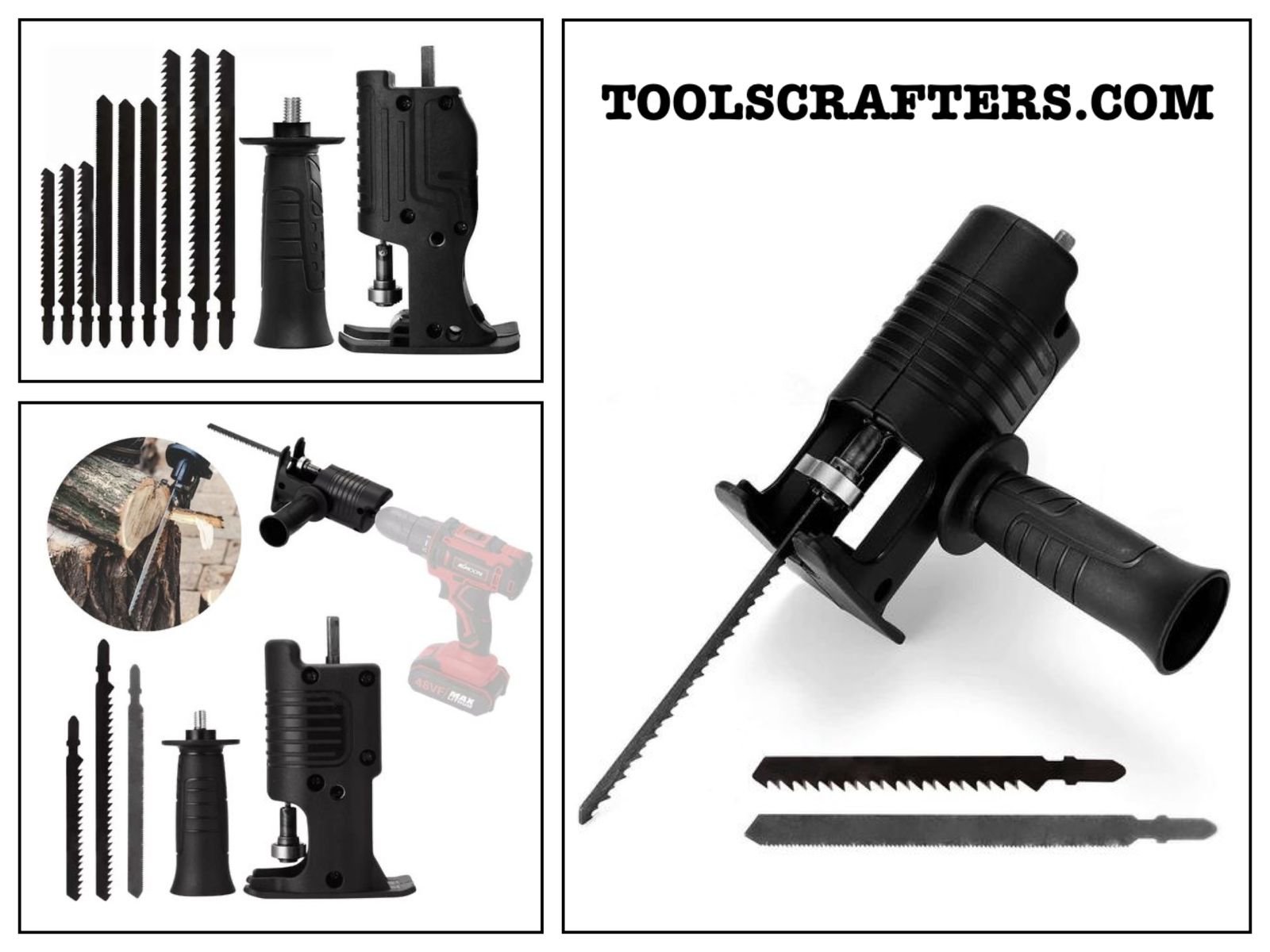
DIY Electric Saw Attachment: Turning a Drill Into a Mini Jigsaw
What It Is & How It Works
This attachment clamps onto your drill’s chuck and converts the drill’s rotational motion into a reciprocating (back-and-forth) motion through a small gearbox, driving a short jigsaw-style blade. You hold the drill roughly the way you’d hold a jigsaw, guide it along a marked line, and it cuts.
Real Workshop Applications
I’ve used this mostly for cutting access panels into plywood and MDF, trimming particle board shelving to fit, and rough-cutting curves in softwood where a perfectly clean edge wasn’t critical. It’s genuinely handy when you’re already holding a drill for a job and don’t want to walk to the workbench for the jigsaw.
Advantages
It’s inexpensive relative to buying a second tool, it’s compact enough to keep in a site bag, and for soft, thin material it does the job without much fuss.
Limitations
The gearbox inside these attachments isn’t built for sustained cutting. Push it through anything denser than soft plywood for more than a few cuts in a row and you’ll feel it bog down. Blade control is also noticeably looser than a real jigsaw — the extra length between your hand and the blade means more wobble, so tight curves are harder to hold accurately.
Who Should Buy It
Someone doing occasional home DIY who doesn’t want to own a jigsaw at all. If you cut wood twice a year, this attachment probably covers you.
Who Should Skip It
Anyone who cuts wood regularly — cabinet installers, trim carpenters, anyone doing daily site work. The attachment will frustrate you long before it saves you money.
Safety Tips
Clamp the workpiece down. The attachment can bind and kick slightly if the material shifts mid-cut, and because you’re holding a drill (not a purpose-built jigsaw with a stable base plate), that kick transfers straight to your hands.
Buying Advice
Look at blade compatibility before buying — some of these accept standard jigsaw blades, others use proprietary short blades that are harder to replace. That detail matters more than the attachment’s advertised cutting capacity.
My Experience
I’ve personally used this accessory in real workshop projects.
Here’s where I found it useful—and where I still prefer using a dedicated power tool.
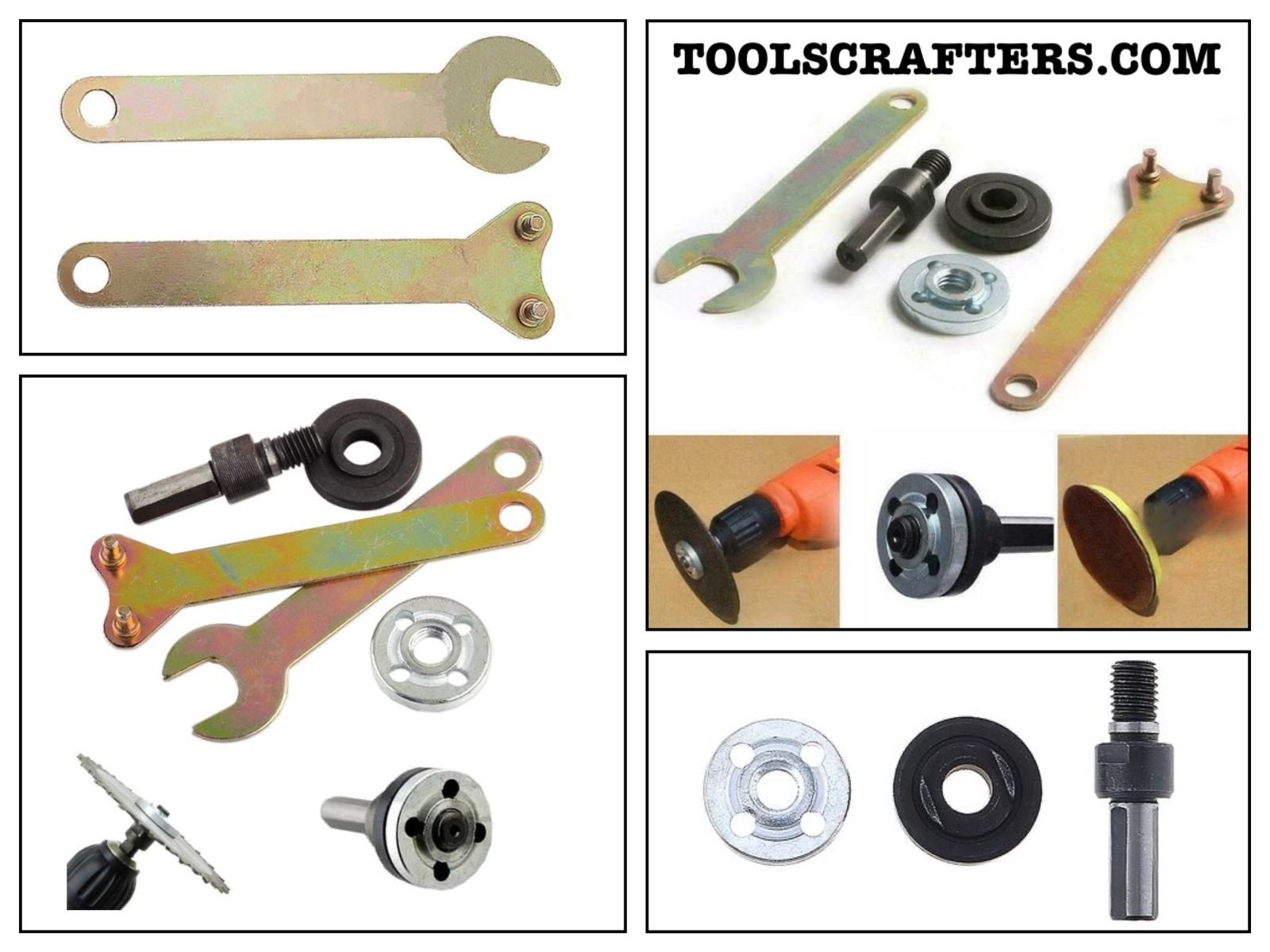
Drill to Grinder Adapter: Light-Duty Grinding and Polishing
What It Is & How It Works
This adapter fits between your drill’s chuck and a small grinding, sanding, or cutting disc, letting the drill spin the disc the way a grinder would — just at the drill’s own speed and torque, not a grinder’s.
Real Workshop Applications
I’ve used mine for polishing welds after a small repair job, light rust removal on a gate hinge, and cutting through a couple of thin threaded rods when I didn’t want to set up the bench grinder for a two-second job. It’s a “the real tool is put away and this will do” accessory, not a primary one.
Advantages
It’s cheap, small, and covers exactly the kind of quick job where getting the angle grinder out feels like overkill.
Limitations
Drills aren’t built to run at sustained high RPM the way grinders are, so this adapter genuinely struggles with anything beyond light material removal. Cutting capacity on threaded rod is limited to smaller diameters, and that limit depends on the specific adapter and disc combination — don’t assume every model handles the same stock size.
Who Should Buy It
Someone with an occasional need for light grinding or polishing who isn’t ready to buy a dedicated grinder, or wants a backup for very small jobs.
Who Should Skip It
Anyone doing regular metal fabrication or cutting anything beyond thin stock. Heavy grinding belongs on a real angle grinder — trying to force this adapter through thicker material is how discs shatter.
Safety Tips
Eye protection is not optional here. Also confirm the adapter and disc are actually rated for each other; mismatched RPM ratings between a disc and an improvised adapter setup is a real way to get hurt.
Buying Advice
Buy from a listing that states the disc compatibility clearly. If a seller can’t tell you what disc sizes and types the adapter accepts, that’s a sign to keep looking.
My Experience
I’ve personally used this accessory in real workshop projects.
Here’s where I found it useful—and where I still prefer using a dedicated power tool.
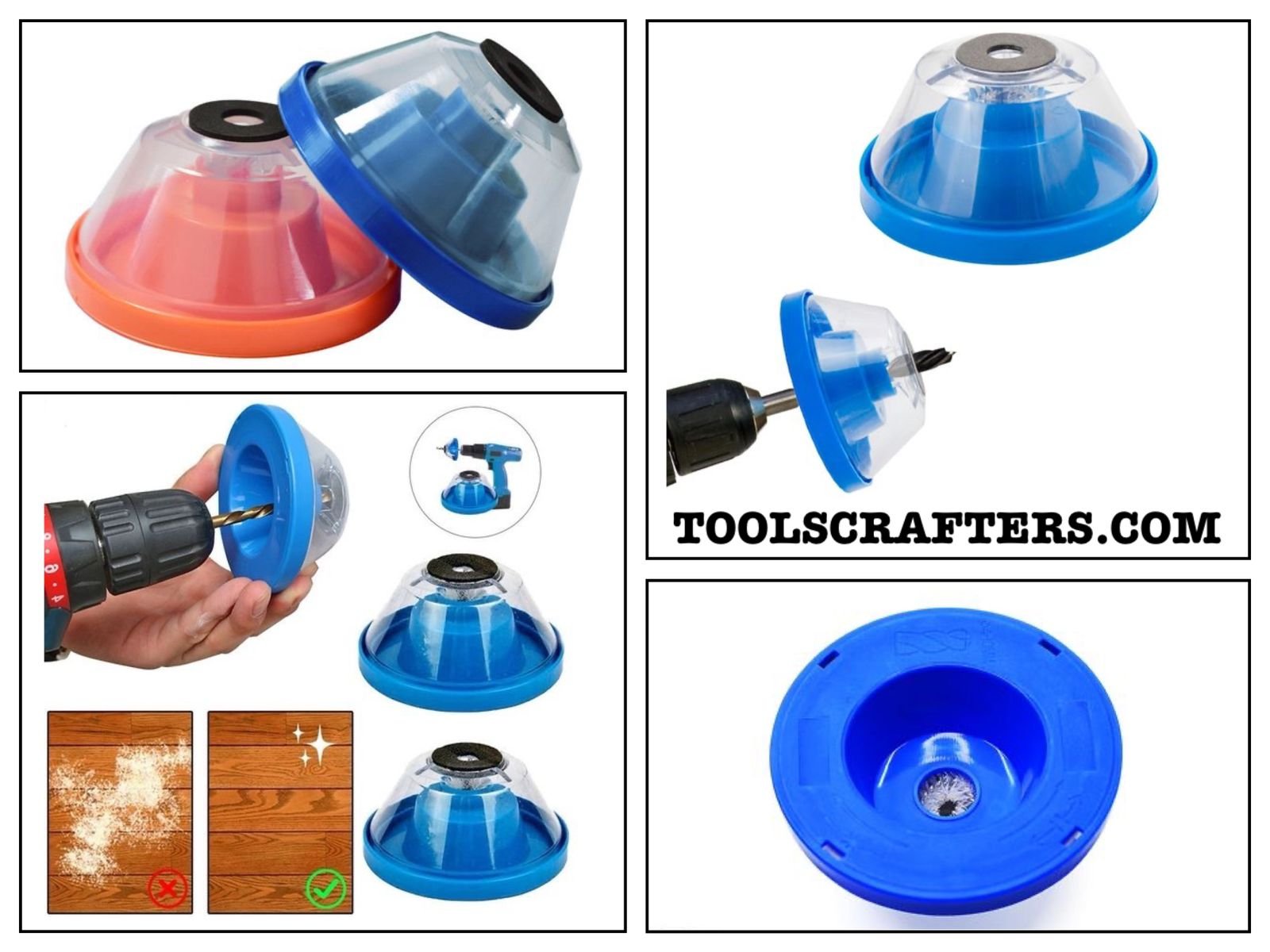
Drill Dust Collector Attachment: Cleaner Drilling for Walls and Ceilings
What It Is & How It Works
This attachment mounts around the drill bit and uses a small vacuum or collection chamber to capture dust as it’s produced, instead of letting it fall (or blow back at your face on overhead work).
Real Workshop Applications
This is the one accessory on this list I’d call close to essential if you drill into walls or ceilings regularly. Working overhead — mounting a light fixture, drilling anchor points into a ceiling — without one of these means dust falling straight back into your eyes. With it, most of that dust gets pulled into the collector instead. It’s also just kinder to a client’s house; nobody wants a fine layer of drywall dust over their furniture after a simple install.
Advantages
Genuinely improves comfort and safety on overhead work, keeps job sites cleaner, and takes almost no time to attach.
Limitations
It adds bulk around the bit, which can get in the way in tight corners. Seal quality on angled surfaces or textured walls varies by model — some collectors seal well against flat drywall but leak more on brick or uneven render.
Who Should Buy It
Contractors, maintenance technicians, and electricians doing regular wall or ceiling drilling. If overhead work is a weekly occurrence, this pays for itself in comfort alone.
Who Should Skip It
If you drill a handful of holes a year for picture frames, it’s a nice-to-have rather than a need.
Safety Tips
Even with the collector fitted, wear eye protection on overhead work — no attachment seals perfectly on every angle, and a stray puff of dust will find your eyes eventually.
Buying Advice
Check whether the collection chamber is easy to empty. Some designs require partial disassembly, which gets old fast if you’re using it daily.
My Experience
I’ve personally used this accessory in real workshop projects.
Here’s where I found it useful—and where I still prefer using a dedicated power tool.
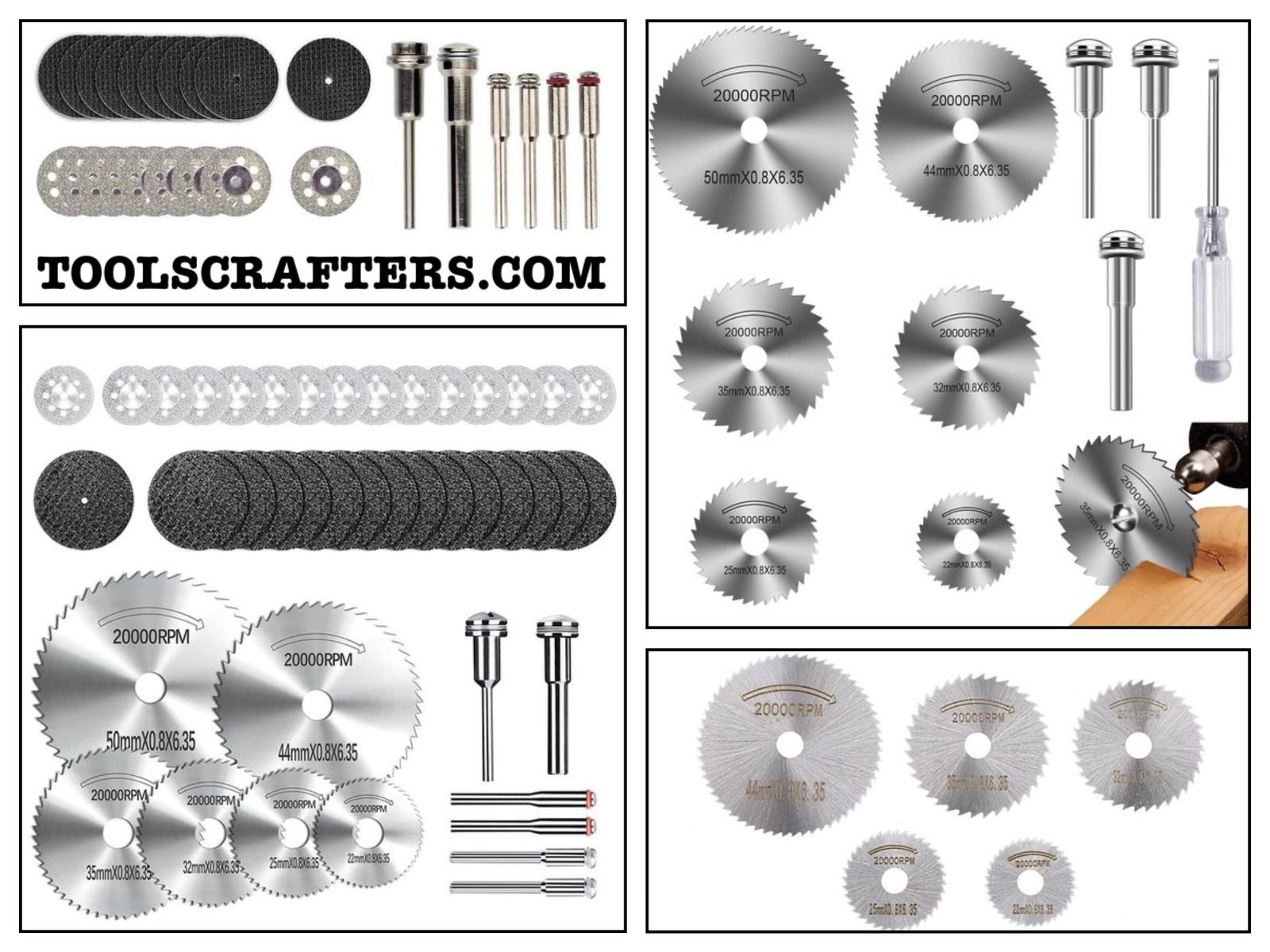
32-Piece Mini Circular Saw Blade Set: Precision Cutting in Tight Spaces
What It Is & How It Works
These are small circular blades that mount to a drill via an arbor adapter, letting you make rotary cuts in confined spaces where a full-size circular saw or jigsaw simply won’t fit.
Real Workshop Applications
I’ve reached for these on trim work and small craft projects — cutting a notch into a piece of plywood in a spot where a normal saw’s body would hit an adjacent wall. They’re genuinely useful for detail work that a bigger tool physically can’t access.
Advantages
Small size means access to tight spots, and having 32 blades in a set means you’re rarely stuck without the right diameter or tooth count for the material.
Limitations
Cutting depth is limited by the blade’s small diameter — this is not a tool for anything structural. Treating it like a full-size circular saw, in terms of the cuts you expect it to make, is the fastest way to be disappointed (or to snap a blade).
Who Should Buy It
Anyone doing detail trim work, small craft or hobby builds, or occasional cuts in spots a full saw can’t reach.
Who Should Skip It
If you’re framing or cutting thick boards regularly, this set won’t hold up to that kind of work and isn’t meant to.
Safety Tips
The blade guard on these is small and easy to bump out of position — check it’s seated properly before every cut, and keep fingers well clear given how exposed the blade edge is at this scale.
Buying Advice
Check the arbor size matches your drill chuck before buying a full 32-piece set — it’s a frustrating discovery to make after the fact.
My Experience
I’ve personally used this accessory in real workshop projects.
Here’s where I found it useful—and where I still prefer using a dedicated power tool.
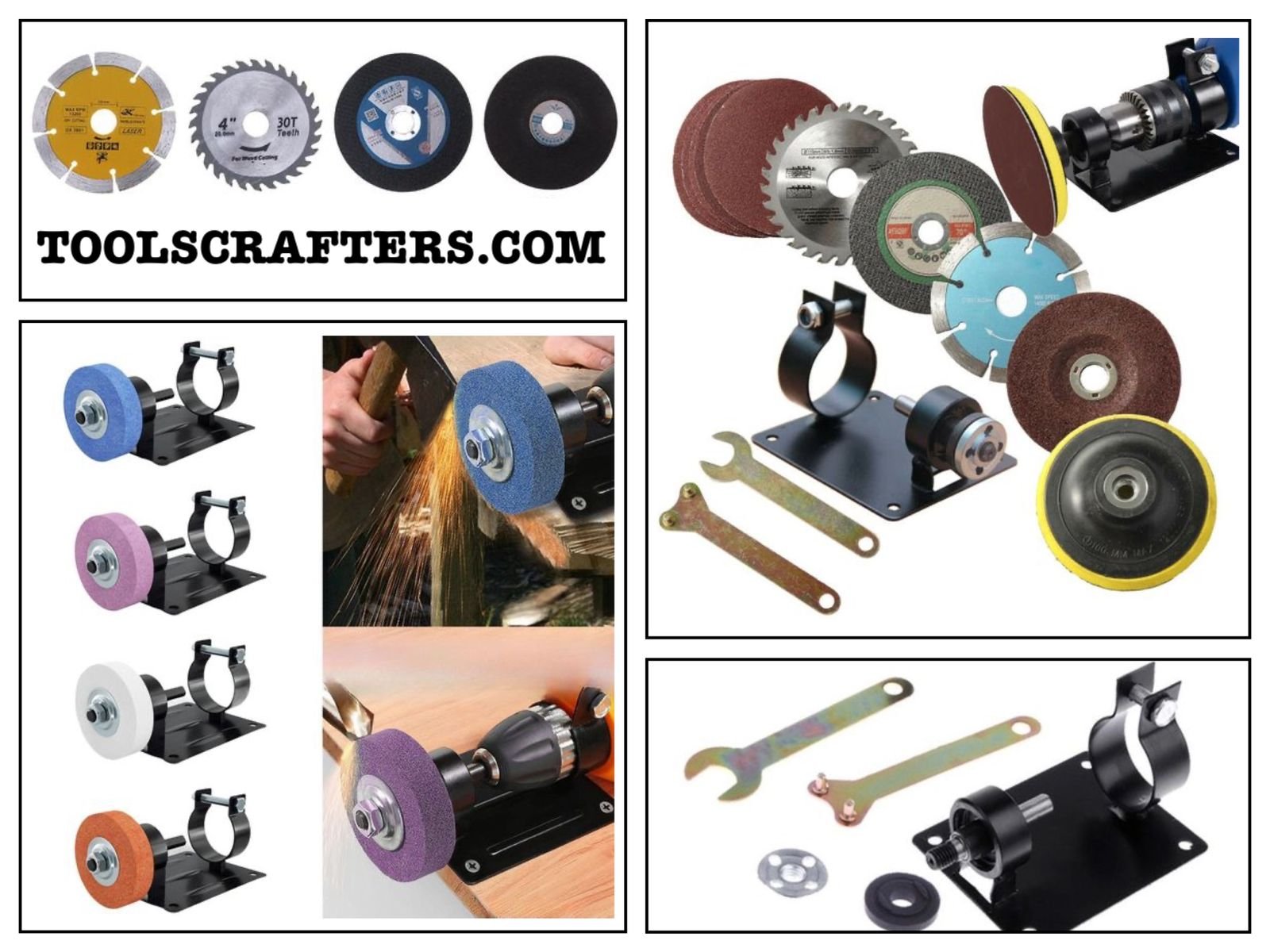
Drill Stand Support Base: A More Stable Workstation
What It Is & How It Works
This is a simple stand or base that holds your drill in a fixed position, essentially turning it into a small stationary tool for cutting, grinding, or polishing tasks where a steady hand isn’t enough.
Real Workshop Applications
I mostly use mine for repetitive sanding or polishing jobs where holding the drill by hand for twenty minutes straight gets tiring and inconsistent. Mounting it in the stand keeps the angle constant and takes the fatigue out of the job.
Advantages
Improves consistency and accuracy for repetitive tasks, and reduces arm fatigue on longer jobs.
Limitations
It’s still a drill stand, not a benchtop drill press or a stationary grinder — it doesn’t have that kind of rigidity. Stability depends heavily on the base being properly clamped to a solid surface; skip the clamping step and you lose most of the benefit.
Who Should Buy It
Anyone doing repetitive light workshop tasks — sanding small parts, polishing, light grinding — where consistency matters more than raw power.
Who Should Skip It
If your work is heavy-duty fabrication or needs machine-shop precision, this stand won’t get you there — that’s what dedicated bench equipment is for.
Safety Tips
Clamp the base itself to the bench, not just the workpiece. A stand that can shift under load is arguably worse than working handheld.
My Experience
I’ve personally used this accessory in real workshop projects.
Here’s where I found it useful—and where I still prefer using a dedicated power tool.
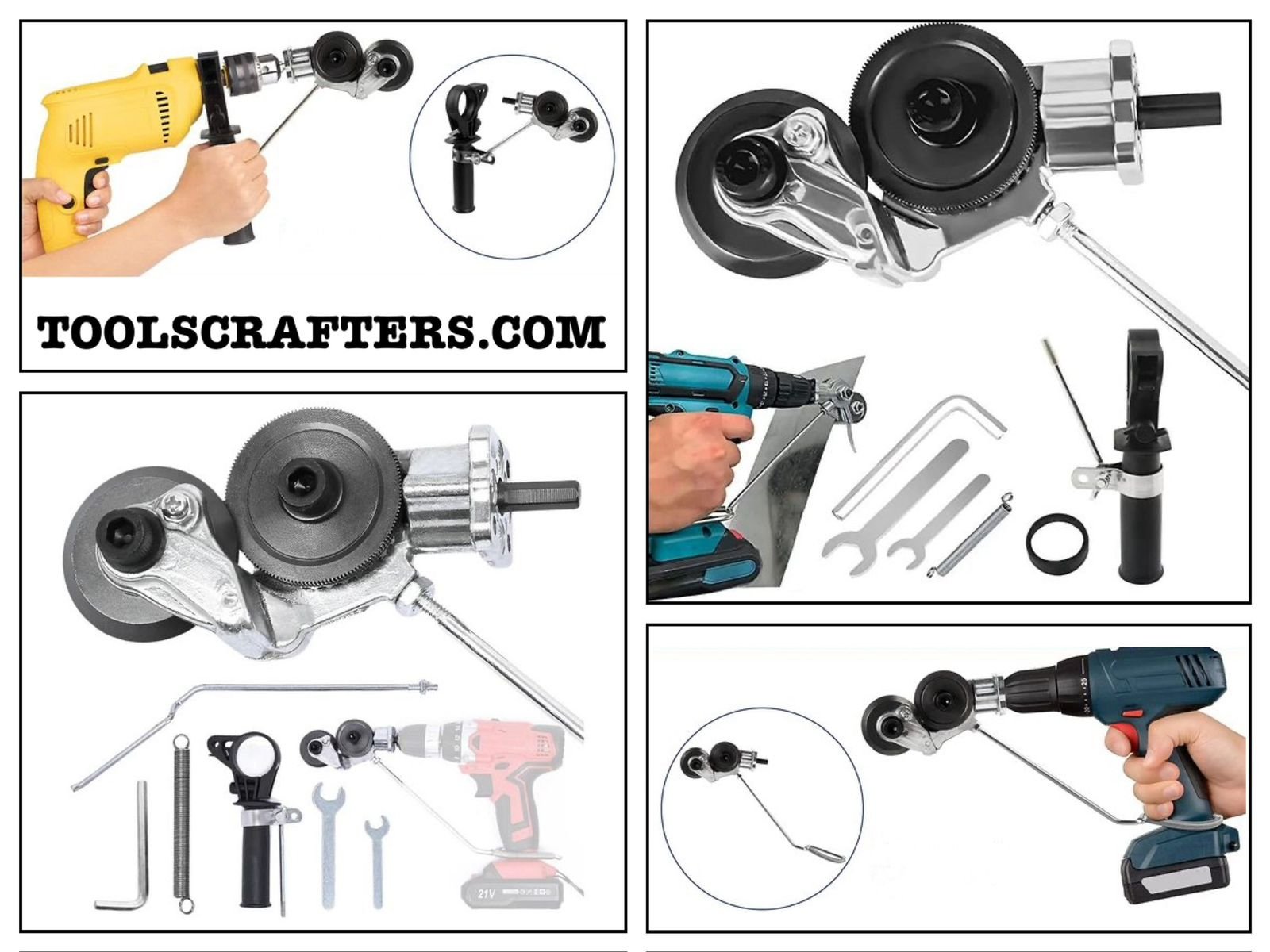
Electric Drill Metal Nibbler Attachment: Safer Sheet Metal Cutting
What It Is & How It Works
A nibbler attachment uses a punch-and-die action, driven by the drill’s rotation through a small gearbox, to “nibble” a path through sheet metal rather than grinding or shearing through it.
Real Workshop Applications
This is one I reach for specifically on GI sheet and ductwork jobs. Compared to an angle grinder, it leaves a noticeably cleaner edge, and there’s a lot less spark — which matters if you’re working somewhere flammable material is nearby, or you just don’t want metal shavings flying everywhere.
Advantages
Cleaner cut edges than most people manage with a grinder, far fewer sparks, and generally easier to control along a curved cutting line than a grinder disc.
Limitations
It’s built for sheet-gauge metal, not anything thick. It’s also slower than a grinder for long, straight cuts on large sheets — the nibbling action takes time to work through material.
Who Should Buy It
Roofers, HVAC and ductwork technicians, and anyone doing regular sheet or GI metal cutting who wants cleaner edges and less spark exposure.
Who Should Skip It
If you’re cutting thick metal stock or need to get through large volumes quickly, a grinder or dedicated shear will serve you better.
Safety Tips
Wear gloves — the nibbled edge is sharp, arguably sharper in places than a grinder cut, and it’s easy to forget that while focused on guiding the tool. Secure the sheet to stop it vibrating, which both improves cut quality and keeps your hands steadier.
Buying Advice
Check the maximum sheet thickness rating on the specific model — this varies enough between manufacturers that assuming one nibbler behaves like another is a mistake.
My Experience
I’ve personally used this accessory in real workshop projects.
Here’s where I found it useful—and where I still prefer using a dedicated power tool.
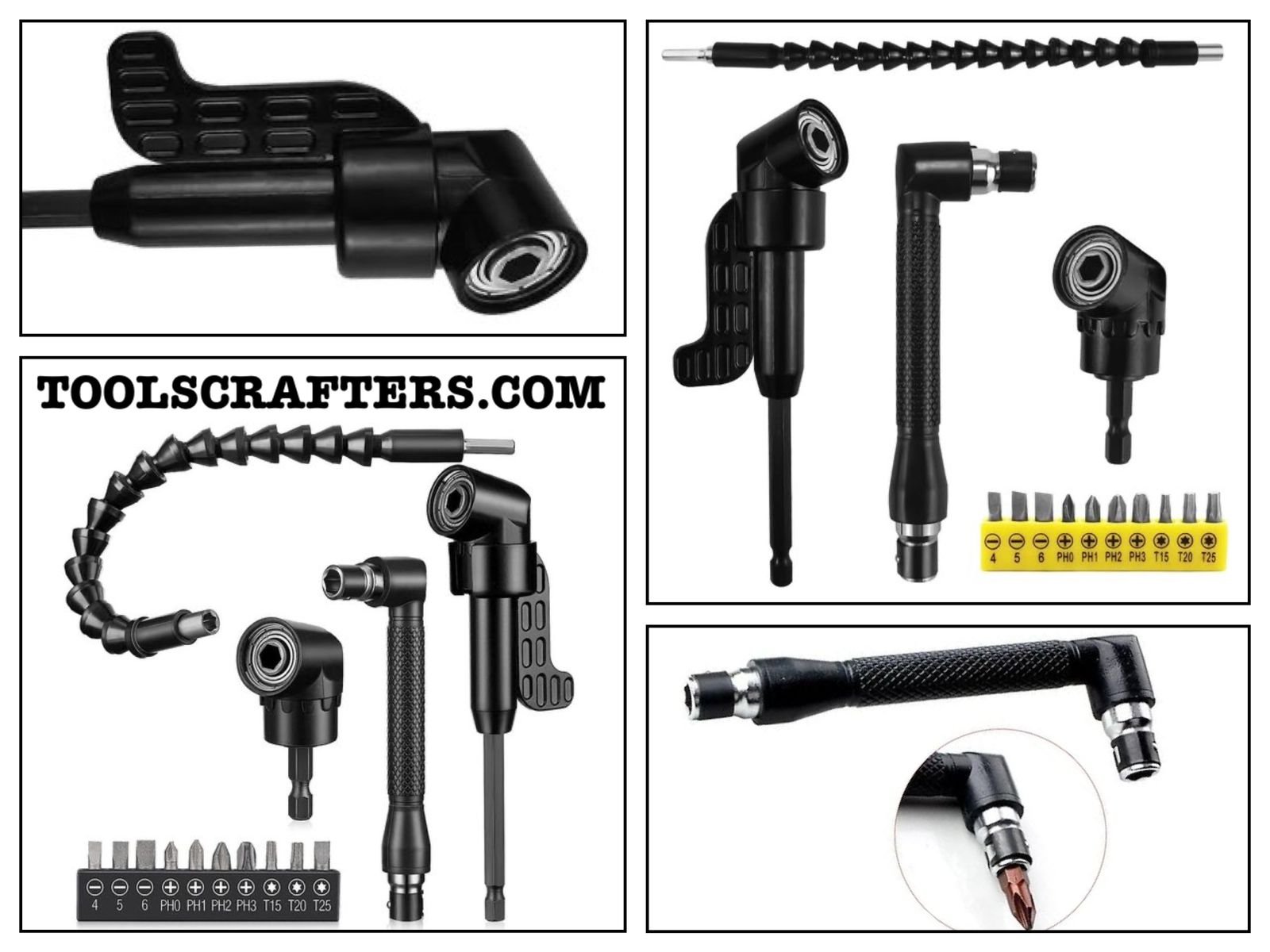
14-Piece Flexible Drill Bit & Right Angle Adapter Set: Reaching Tight Corners
What It Is & How It Works
This set includes a flexible shaft and right-angle adapters that let you drive screws or bits at odd angles or around obstructions, in spots where a straight drill body simply won’t fit.
Real Workshop Applications
This is probably the single most useful accessory on this list for anyone doing furniture assembly, cabinet installs, or appliance work. Reaching a screw tucked behind a cabinet side panel, or driving a fastener in a spot where the drill body would hit an adjacent wall, is exactly what this set is for.
Advantages
Opens up access to fasteners that would otherwise need an offset screwdriver and a lot of patience, and the flexible shaft in particular is a genuine time-saver in cramped cabinet interiors.
Limitations
Torque transfer through a flexible shaft is noticeably lower than driving directly, and control suffers a bit too — you can feel the shaft flex under resistance rather than transferring all your effort into the fastener.
Who Should Buy It
Furniture assemblers, appliance technicians, cabinet installers, and anyone doing maintenance work in tight enclosures.
Who Should Skip It
If you’re regularly driving high-torque structural fasteners, this isn’t the right tool — you’ll lose too much torque through the flex point and risk stalling out on a stubborn screw.
Safety Tips
Don’t force the shaft through resistance — that’s how they kink and eventually snap internally. If a fastener isn’t turning, back off and check what’s binding it rather than pushing harder.
Buying Advice
A 14-piece set covers a decent range of bit types, but check that the right-angle adapter head is compact enough for your actual use case — some are bulkier than they look in photos.
My Experience
I’ve personally used this accessory in real workshop projects.
Here’s where I found it useful—and where I still prefer using a dedicated power tool.
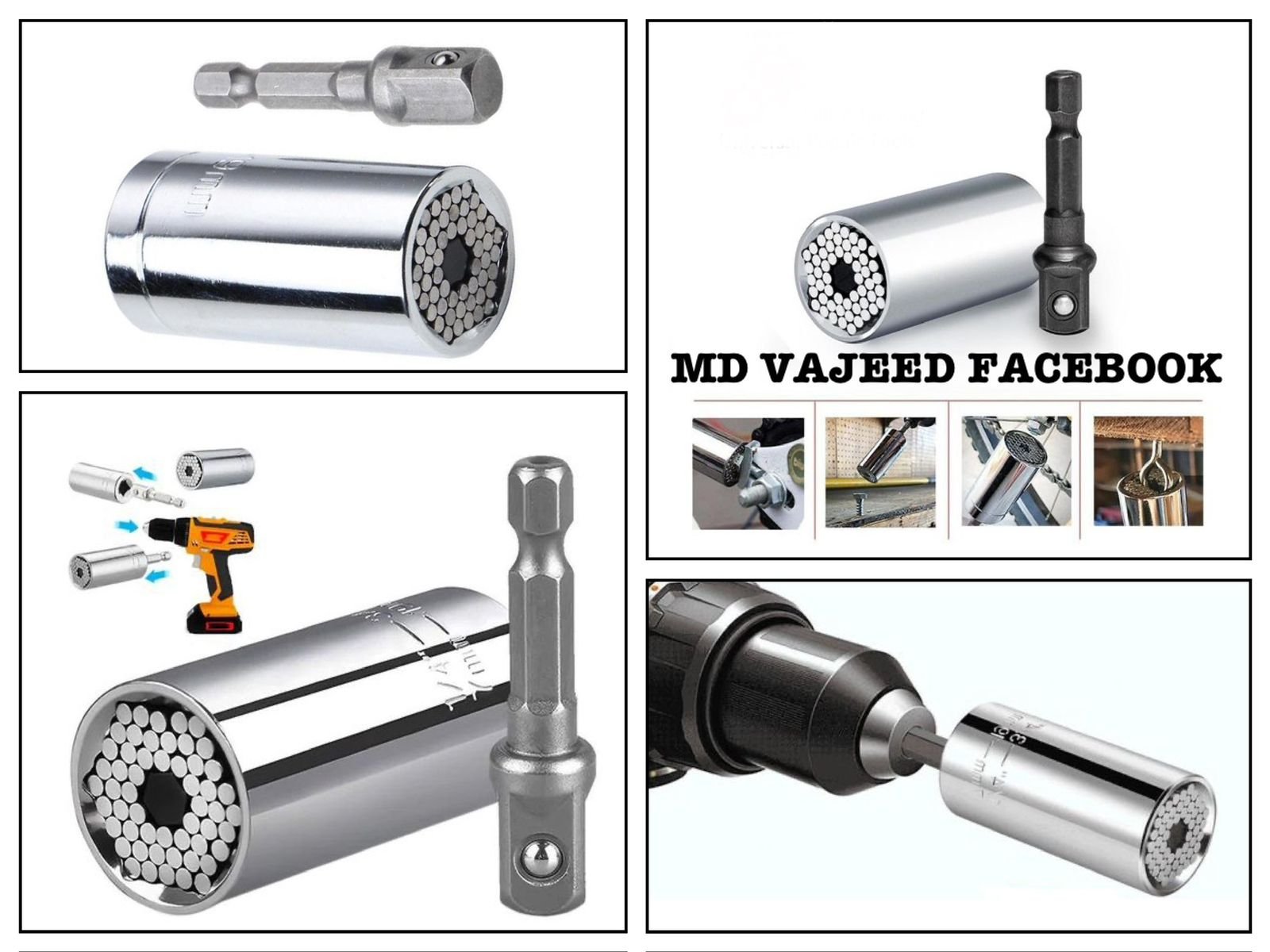
Universal Socket Tool: One Socket for Many Fasteners
What It Is & How It Works
This is a single adjustable socket mechanism, usually with a set of spring-loaded pins or an adjustable jaw, that grips a range of nut and bolt head sizes instead of needing a separate socket for each.
Real Workshop Applications
I keep one of these in a mobile repair kit specifically because it cuts down what I need to carry. For quick repairs where I don’t know in advance what fastener size I’ll hit, it saves digging through a full socket set.
Advantages
Covers a wide range of fastener sizes — commonly somewhere in the 7–19mm range, though the exact range depends on the model — from a single tool, which is a real space and weight saver.
Limitations
Grip strength is lower than a properly fitted dedicated socket, especially on rounded, damaged, or very tight fasteners. It’s a convenience tool, not a precision one.
Who Should Buy It
Anyone doing occasional repairs across a range of fastener sizes, or mobile technicians who want to reduce the tools they carry.
Who Should Skip It
If your work involves torque-critical fastening — engine components, structural bolts — stick with a proper socket set. This tool isn’t designed for that level of precision or grip.
Safety Tips
If a fastener feels like it’s slipping rather than gripping, stop and switch to a properly sized dedicated socket instead of forcing it — a slipping socket under load is how knuckles get hurt.
Buying Advice
Check the printed size range on the specific model before buying, since this varies between manufacturers more than the generic marketing suggests.
My Experience
I’ve personally used this accessory in real workshop projects.
Here’s where I found it useful—and where I still prefer using a dedicated power tool.
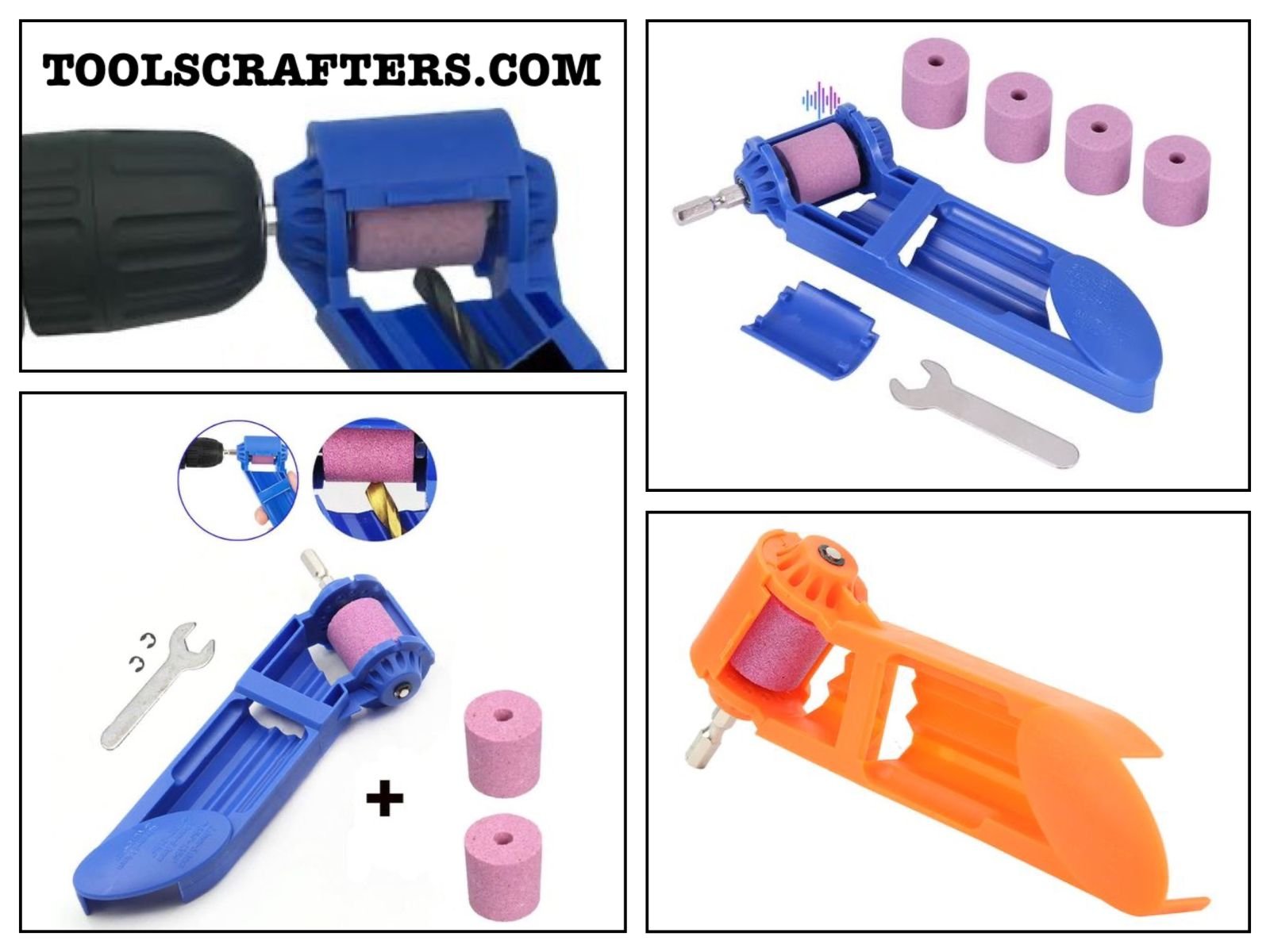
Portable Drill Bit Sharpener: Getting More Life Out of Your Bits
What It Is & How It Works
This small attachment or standalone unit uses a guided grinding wheel to restore a proper cutting edge to a dull drill bit, following the correct angle for the bit type.
Real Workshop Applications
I didn’t think this one would get much use when I bought it, but it’s become a regular part of end-of-week cleanup — running a handful of bits that have gone dull over a job through the sharpener instead of tossing them and buying new ones.
Advantages
Extends the working life of your existing bit collection significantly, and the cost savings over time are real if you go through bits regularly.
Limitations
It restores an edge — it doesn’t repair structural damage. A bit that’s chipped, bent, or been overheated to the point of losing its temper won’t come back from a session on the sharpener.
Who Should Buy It
Anyone who drills often enough to notice bits going dull on a regular basis and wants to cut down on constantly replacing them.
Who Should Skip It
If most of your current bits are already in rough shape — badly worn or physically damaged — a sharpener won’t fix the underlying problem. You’re better off replacing that set and starting fresh.
Safety Tips
Don’t hold the bit against the wheel too long in one spot — overheating the tip during sharpening can undo the bit’s temper just as badly as overheating it during drilling.
Buying Advice
Match the sharpener’s guide angle setting to the type of bit you use most — most sharpeners have adjustable angle guides, and using the wrong one produces an uneven edge.
My Experience
I’ve personally used this accessory in real workshop projects.
Here’s where I found it useful—and where I still prefer using a dedicated power tool.
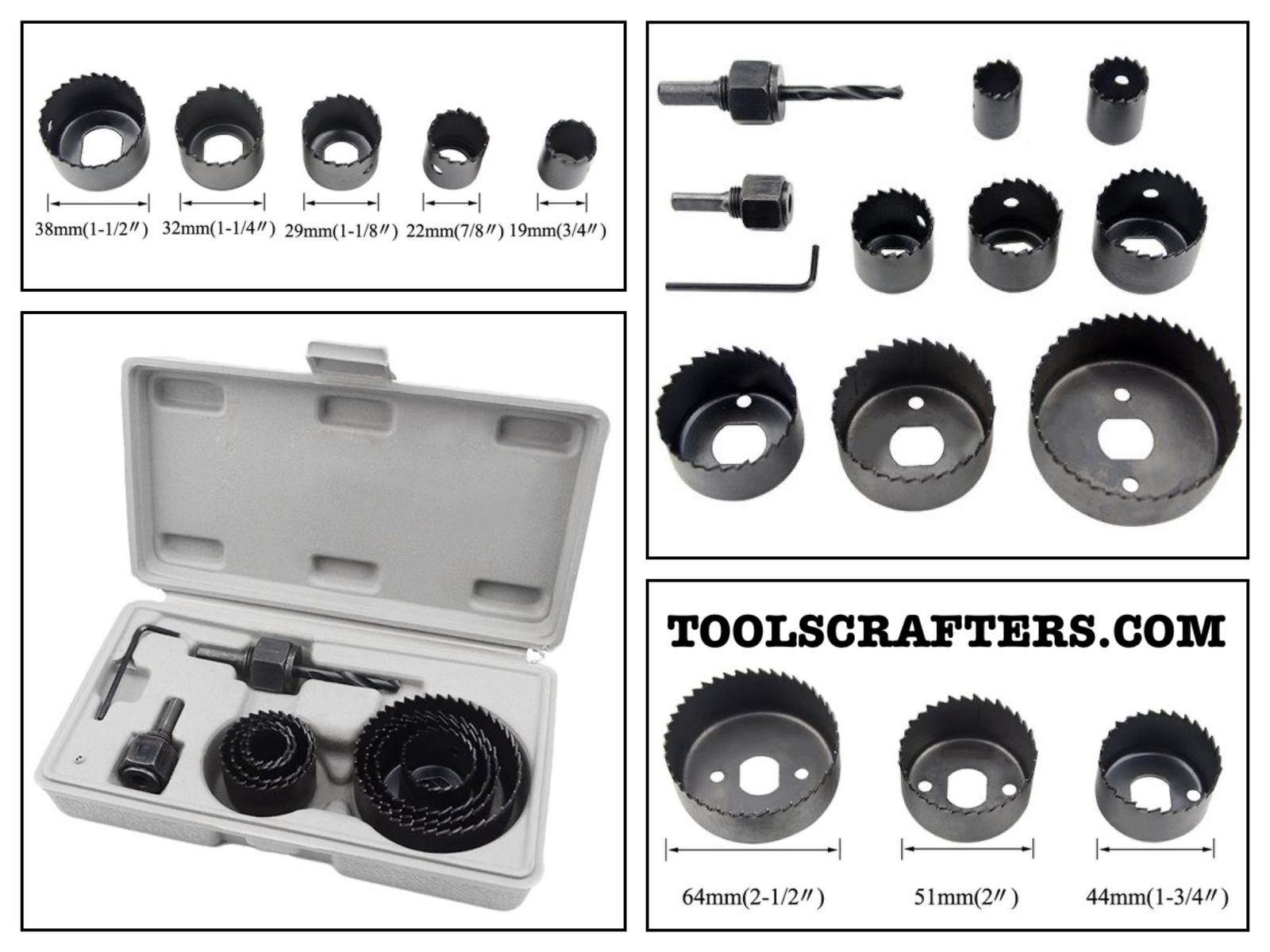
11-Piece Hole Saw Drill Bit Set: Clean Circular Holes
What It Is & How It Works
A hole saw is a cylindrical blade with cutting teeth around the rim, paired with a pilot bit that centers the cut. This set includes multiple diameters to cover a range of hole sizes.
Real Workshop Applications
This one gets constant use — running cable through a stud, cutting access holes in gypsum board, boring holes in PVC for plumbing runs. Having eleven sizes in one case means I’m rarely stuck without the right diameter on site.
Advantages
Versatility is the main selling point here — one set genuinely covers wood, PVC, and gypsum board across a useful range of common hole sizes.
Limitations
Whether a given hole saw in the set can handle metal, and how long its teeth stay sharp doing it, depends heavily on the material grade and manufacturer. Don’t assume every hole saw marketed this way is rated for metal just because one bit in a similar-looking set was.
Who Should Buy It
Electricians, plumbers, and carpenters who regularly need round holes of varying diameters — this is close to a daily-use tool for those trades.
Who Should Skip It
If you need exactly one hole size for a single job, buying a single hole saw bit in that size is more sensible than a full set.
Safety Tips
Make sure the pilot bit is sharp and properly centered before starting — a dull or off-center pilot bit causes the hole saw to wander, which is both a poor cut and a control hazard.
Buying Advice
Clear debris from the teeth between holes, especially in wood — packed sawdust in the gullets slows the cut and generates more heat than necessary.
My Experience
I’ve personally used this accessory in real workshop projects.
Here’s where I found it useful—and where I still prefer using a dedicated power tool.
Drill Attachment vs. Dedicated Tool: What You Gain and Lose
| Attachment | Dedicated Equivalent | What You Gain | What You Lose |
|—|—|—|—|
| Electric Saw Attachment | Jigsaw | Cost, storage space | Cutting power, blade control |
| Grinder Adapter | Angle Grinder | Cost, convenience for small jobs | Sustained RPM, cutting capacity |
| Mini Circular Saw Blades | Circular Saw | Access to tight spaces | Cutting depth |
| Metal Nibbler | Angle Grinder (for sheet metal) | Cleaner edge, fewer sparks | Speed on large cuts |
| Flexible Bit Set | Offset Screwdriver | Reach in tight spaces | Torque transfer |
| Universal Socket | Full Socket Set | Fewer tools to carry | Grip precision |
Who Should Buy What: A Persona Guide
DIY Homeowner: Dust collector, universal socket, flexible bit set. These cover the everyday jobs — hanging shelves, small repairs, cabinet tweaks — without much learning curve.
Carpenter: Mini circular saw blade set, drill stand, hole saw set. These support the kind of detail and repetitive work that comes up in cabinetry and finish carpentry.
Electrician or Plumber: Hole saw set, flexible bit set, dust collector. Running cable and pipe through studs and walls is most of the job, and these three attachments are built around exactly that.
Maintenance Technician: Dust collector, nibbler attachment, universal socket, flexible bit set. Mixed job types call for a mixed kit, and this combination covers drilling, light metal work, and quick fastening in one bag.
Workshop Tips That Save Time (and Attachments)
Check chuck compatibility before buying anything. Attachments assume a certain chuck size and type, and this isn’t always obvious from a product photo — read the listing carefully.
Cordless drills lose torque as the battery drains, and attachments that need sustained torque — the nibbler, the grinder adapter — will struggle noticeably on a half-charged battery. If a job calls for one of these, start with a full charge or use a corded drill.
Keep attachments in a dedicated case. Loose bits and adapters rattling around in a toolbox are the easiest things to lose on a job site, and the easiest to damage against other tools.
Always test a new attachment on scrap material before touching the actual workpiece — this applies especially to the saw attachment and mini circular blades, where blade behavior can surprise you the first few times.
Maintenance Tips
Empty and clean the dust collector after every job — suction drops fast once it’s full, and a clogged collector is worse than no collector at all on the next job.
Wipe down the nibbler and any metal-cutting attachment after use to prevent rust forming from metal swarf and ambient moisture.
Store flexible shafts loosely coiled, not tightly wound — tight coiling over time damages the internal cable and reduces flexibility.
Sharpen or replace hole saw teeth once you notice the cut slowing down or the edge quality dropping — pushing a dull hole saw just generates heat and wears the pilot bit faster.
Check adapter set screws and chuck connections periodically. Vibration from regular use loosens these over time, and a loose adapter is both a performance problem and a safety one.
Common Mistakes People Make With Drill Accessories
Assuming an attachment fully replaces the dedicated tool it mimics. Every accessory here has a real use case and a real ceiling — knowing where that ceiling is matters more than the marketing copy.
Buying the cheapest set available without checking chuck or drill compatibility first, then discovering it doesn’t fit.
Skipping eye protection with the grinder adapter because “it’s just a drill.” The disc doesn’t care what’s spinning it.
Forcing a flexible shaft through resistance instead of backing off — this is the single most common way these sets get damaged early.
Ignoring maintenance entirely. None of these accessories are maintenance-free, and skipping basic care is why some people conclude an attachment “wasn’t any good” when the real issue was neglect.
Not testing on scrap first, especially with cutting attachments where blade behavior takes a few cuts to get a feel for.
Frequently Asked Questions
Can I use a drill attachment instead of buying a separate power tool?
For occasional or light use, often yes — the dust collector, flexible bit set, and hole saw set in particular hold up well as substitutes for regular tasks. For daily or heavy-duty work, the dedicated tool will outperform the attachment and probably outlast it too.
Are drill-to-grinder adapters safe to use?
They’re safe within their limits — light sanding, polishing, and small cutting jobs — provided you use proper eye protection and a disc rated for the adapter. They’re not a safe substitute for heavy grinding, where a drill’s motor and speed range simply aren’t built for the load.
What size chuck do most drill attachments fit?
This varies by manufacturer, so check the specific listing rather than assuming. Most consumer attachments are designed for common keyless chuck sizes, but compatibility isn’t universal across brands.
Do drill attachments work with cordless drills?
Yes, generally, though torque-dependent attachments like the nibbler or grinder adapter perform noticeably better with a fully charged battery or a corded drill.
Can a drill saw attachment cut plywood cleanly?
It can produce a usable cut in plywood, MDF, and softwood, though the edge won’t be as clean or as controlled as a dedicated jigsaw would produce, especially on curves.
How do I know if a hole saw set will cut metal or just wood/PVC?
Check the material rating on the specific set — this depends on the hole saw’s construction and the manufacturer, and not every set marketed for general use is rated for metal.
Is a dust collector attachment worth it for occasional DIY use?
It’s a nice-to-have rather than essential if you only drill a handful of times a year. For regular wall or ceiling work, it becomes much more worthwhile.
Can a portable bit sharpener fix a badly damaged drill bit?
No — it restores a dull edge on an otherwise sound bit, but it can’t repair a chipped, bent, or overheated bit that’s lost its temper.
What’s the difference between a nibbler attachment and an angle grinder for sheet metal?
A nibbler produces a cleaner edge with fewer sparks but works more slowly and is limited to sheet-gauge material. A grinder is faster and handles thicker stock but leaves a rougher edge and throws more sparks.
Do universal socket tools work on rounded or damaged nuts?
Not reliably — their grip is weaker than a properly fitted dedicated socket, and a rounded fastener is exactly the situation where that weaker grip becomes a problem.
How much torque do flexible shaft attachments lose compared to direct drilling?
There’s a noticeable drop, though the exact amount depends on the shaft and adapter design. It’s enough that heavy-torque fastening isn’t a good match for this type of attachment.
Are cheap drill accessory sets worth buying, or should I buy dedicated tools?
Depends on frequency of use. For occasional jobs, a reasonably priced accessory often makes more sense than a full dedicated tool sitting unused most of the year. For regular or professional use, the dedicated tool usually pays for itself in durability and performance.
Final Buying Recommendations
There isn’t one universal “best kit” here, because the right combination depends on what you actually do with a drill day to day. Three paths cover most people:
Budget DIY starter kit: Dust collector, universal socket, flexible bit set. Low cost, and it covers the bulk of everyday household jobs.
Trades and technician kit: Hole saw set, flexible bit set, dust collector, nibbler attachment. Built around durability and the specific tasks that come up in electrical, plumbing, and maintenance work.
Hobbyist and precision kit: Mini circular saw blade set, drill stand, portable bit sharpener. Focused on control and finish quality for detail and craft work.
None of these accessories are gimmicks when used within their actual limits, and none of them are a substitute for the dedicated tool they resemble when the job calls for real power or precision. Know which situation you’re in before you reach for one.