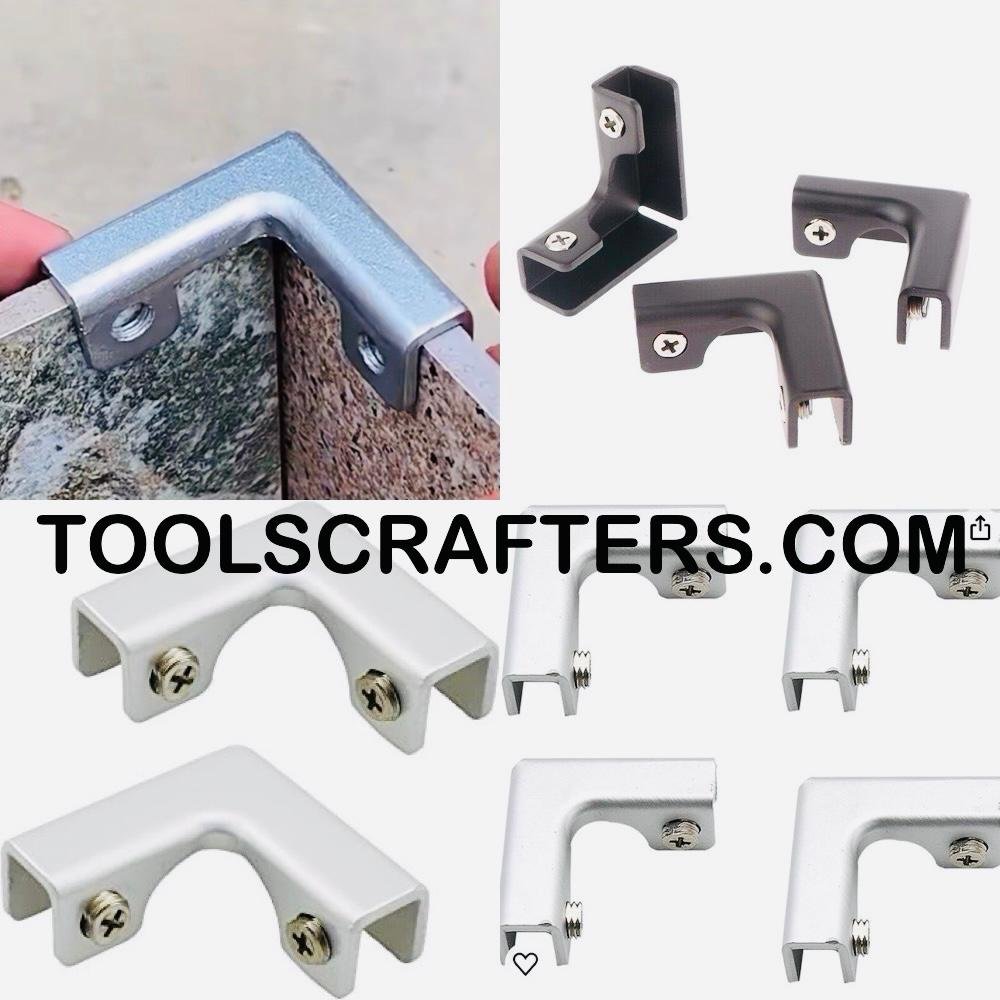
Anyone who has tried to join two panels of glass at a clean, square corner knows the problem isn’t the glass — it’s keeping everything still long enough to get it right. A glass fixing clamp with screws is one of the simplest tools for solving that problem, and it shows up constantly in display cabinet work, shelving, partitions, and small furniture builds. This guide walks through what the hardware actually does, where it earns its place in a project, and where it doesn’t belong.
What Is a Glass Fixing Clamp?
A glass fixing clamp with screws — also sold as a 90 degree glass corner clamp, glass corner connector, L shape glass connector, or glass connector clip holder — is a small metal fitting that joins two glass panels at a right angle without drilling through the glass itself.
Instead of bolting through the panel, the clamp wraps around the edges of both pieces of glass at the corner and is tightened with screws until the joint holds firm. The glass stays intact — no holes, no risk of the panel cracking from a drill bit catching at the wrong angle.
It’s a corner fitting, not a full frame. That distinction matters, because a lot of buyers assume it does the same job as an aluminum frame system or structural glass channel. It doesn’t, and we’ll get into exactly where the line sits later in this guide.
How It Works
The mechanism is straightforward. Two jaws — one for each glass panel — meet at a 90-degree angle inside the clamp body. When you slide the glass edges into place and turn the screws, the jaws close in and grip both panels at once, locking the corner in position.
Because the two jaws are fixed at a right angle relative to each other, the clamp does a lot of the alignment work for you. You’re not eyeballing a square corner freehand — you’re tightening hardware that’s already built to hold that angle, provided the glass edges themselves are cut reasonably square to begin with.
This is also why the clamp is popular for assembly, not just final fixing. A lot of installers will dry-fit an entire cabinet or display case with these clamps loosely tightened, check that everything lines up, and only then go back and tighten each corner fully.
Why 90 Degree Corner Accuracy Matters
A corner that’s even a degree or two off doesn’t look like much on paper, but it shows immediately once glass is involved. Light reflects differently off a skewed edge, doors and lids that are supposed to meet the case squarely start binding or gapping, and the whole piece can look subtly “off” even to someone who couldn’t tell you why.
There’s a practical side too. If you’re building a display cabinet with a door or a glass box with a lid, everything downstream depends on that first corner being true. A shelf that’s not sitting level, or a door that catches on one side, usually traces back to a corner that wasn’t checked for square before the joint was locked down.
This is really the core value of a dedicated corner clamp over improvising with clamps, tape, or silicone alone — it’s built to hold that angle while you work, rather than relying on your hands to hold everything steady until the joint sets.
Why Furniture Manufacturers Use It
Small-shop and custom furniture builders lean on this hardware because it speeds up repeatable work. If you’re building several matching display cases or glass cabinet doors, having a clamp that locks in the same 90-degree angle every time means less time spent squaring each corner by hand and less variation between pieces.
It also simplifies revisions. If a panel needs to be swapped out — say a piece arrives scratched, or a client wants a different glass finish — a screwed clamp can usually be loosened and the panel replaced without rebuilding the whole joint, which isn’t the case with a fully bonded silicone corner.
Why Glass Installers Use It
For installers working on-site rather than in a shop, the appeal is largely about control during assembly. Glass panels are heavy, awkward, and unforgiving of sudden movement, so having a fitting that holds two panels together the moment they’re positioned — rather than needing a helper to brace them while adhesive cures — makes a real difference to how a job goes.
It’s also easier to make small adjustments on-site. If a partition or cabinet needs to be nudged slightly before final tightening, a mechanical clamp gives you that window. Silicone, once it starts curing, does not.
Key Features
Based on what’s typically specified for this style of hardware, a glass fixing clamp with screws generally includes:
– An L-shaped body that holds two glass panels at a fixed 90-degree angle
– Adjustable screws that tighten the jaws against both glass edges
– A design that avoids drilling through the glass panel itself
– A compact profile intended to stay visually minimal at the corner joint
Material, finish, and any padding inside the jaws vary by manufacturer and listing. Rather than assume a specific metal grade or finish, always check the actual product listing you’re buying from — this is one of the details that differs the most between otherwise similar-looking clamps.
Benefits
Faster assembly. Because the clamp holds the angle for you, you’re not spending time re-checking square after every adjustment.
More consistent results across multiple corners or units. Useful for anyone building more than one matching piece.
No large holes through the glass. Reduces the risk associated with drilling glass, particularly on panels you can’t easily replace.
Easier to service. A screwed joint can typically be loosened and re-tightened, which isn’t true of a fully silicone-bonded corner.
Cleaner visual line at the corner compared to a bulkier framed system, for projects where a minimal look matters.
None of this replaces good technique. The clamp helps you get to a square, secure corner faster — it doesn’t correct for a badly cut panel or a rushed installation.
Compatible Glass Thickness
This particular listing specifies compatibility with **4–8 mm glass thickness**. That range is not universal across every glass corner clamp on the market — some are built for thinner display glass, others for heavier panels — so treat this figure as specific to this product, not a general rule for all clamps of this style.
Before ordering, measure your actual glass panels and cross-check that measurement against the listing you’re buying from, not just the thickness mentioned in a general guide like this one. Getting this wrong is one of the most common (and easily avoided) mistakes buyers make.
Common Applications
Retail and display work
Glass display cabinets, showcases, and retail display units are probably the most common home for this hardware — the corners take moderate handling but need to look sharp.
Furniture and cabinetry
Glass furniture pieces, kitchen glass cabinet doors, and bathroom glass shelves all use this type of corner joint, often alongside other [cabinet hardware](https://toolscrafters.com/category/hardware/) like hinges and brackets.
Interior and office fit-outs
Office partitions and glass boxes used in interior decoration projects benefit from the clean, low-profile look the clamp gives compared to a full frame.
DIY and small-batch builds
For DIY glass projects and small furniture manufacturing runs, the clamp offers a repeatable way to get square corners without specialized glazing tools.
Glass Clamp vs Silicone-Only Fixing
| Factor | Glass Fixing Clamp | Silicone-Only Fixing |
|—|—|—|
| Visual result | Small hardware visible at the corner | Seamless, no visible hardware |
| Assembly time | Fast — mechanical grip is immediate | Slower — needs cure time before handling |
| Adjustability | Can usually be loosened and re-tightened | Difficult to adjust once cured |
| Serviceability | Panels can often be replaced individually | Panel replacement usually means breaking the bond |
| Best suited for | Display cabinets, furniture, partitions needing a serviceable joint | Projects where a completely seamless look matters more than serviceability |
| Skill/tools needed | Basic hand tools, screwdriver | Careful application, clean surfaces, patience for cure time |
Neither option is universally “better” — it depends on whether you value a reversible, mechanical joint or a seamless bonded one. Many experienced installers actually use both together: silicone for the final seal against moisture and dust, with the clamp handling the structural alignment and holding the panels in place while the silicone sets.
Glass Clamp vs Aluminum Frame Systems
| Factor | Glass Fixing Clamp | Aluminum Frame System |
|—|—|—|
| Coverage | Corner fitting only | Frames the full perimeter of the panel |
| Aesthetic | Minimal, glass stays mostly exposed | Visible frame around the whole piece |
| Cost | Generally lower per unit | Generally higher due to material and machining |
| Assembly complexity | Simple — a few screws per corner | More involved — frame sections need to be cut and fitted |
| Best suited for | Lighter fixtures, display work, furniture corners | Larger installations, partitions needing full edge protection |
If a project needs the glass edges protected along their full length — not just at the corners — an aluminum frame system is doing a different job than a corner clamp, and the two aren’t really interchangeable.
Where This Clamp Should NOT Be Used
This is worth being direct about: a glass fixing clamp with screws is corner-joining hardware for light to moderate-use furniture and display applications. It is **not** intended for structural glazing, balcony glass, staircases, balustrades, or any other load-bearing glass system unless a specific product has been designed and certified for that use.
If you’re working on anything where a glass failure could result in injury — railings, floor panels, overhead glazing, structural partitions — that’s a job for glass hardware specifically rated and certified for structural use, installed according to local building codes, not general-purpose display or furniture clamps like this one. When in doubt, that’s a conversation for a structural glazing contractor, not a product review.
Can It Be Used for Glass Aquariums?
This is a common question, and the honest answer is: proceed with caution and verify with the manufacturer first. Aquariums involve sustained water pressure against the glass and silicone seams that are typically engineered specifically for that load over long periods.
A corner clamp like this can be genuinely useful during the *build* phase — holding panels square while silicone seams are applied and cured — but it should not be assumed to be a substitute for a properly silicone-sealed aquarium joint, and it should not be left as the sole means of holding water-bearing glass together. If you’re building an aquarium, check the manufacturer’s stated use cases directly, and don’t rely on general marketing language from a listing photo.
Can It Replace Glass Channels?
Not directly. Glass channels run along the full length of a panel edge and are typically used where a glass panel needs continuous support — for example, along the bottom of a large partition or shower panel. A corner clamp only engages at the joint between two panels.
If your project needs support along an edge, not just at a corner, a channel system is doing a different structural job, and swapping in corner clamps instead would leave the rest of that edge unsupported.
Buying Guide
Check the glass thickness range. Confirm your panel thickness against the specific listing — 4–8mm is what this listing specifies, but other clamps on the market are built for different ranges.
Look at the screw and thread quality in the listing photos and description. This is hardware that gets tightened and loosened repeatedly, so cheap threading tends to show up as a problem quickly.
Check whether the jaws include any protective padding. Some clamps include a liner to protect glass edges from scratching; others don’t. Don’t assume — check the specific listing.
Confirm the finish matches your project. Available finishes vary by manufacturer, so if appearance matters (matching other hardware in the room, for instance), check listing photos rather than assuming a standard finish.
Buy a couple extra. Screws are small and easy to lose during assembly, and having a spare clamp on hand avoids a delay if one arrives with a manufacturing defect.
Don’t rely on load or durability claims you can’t verify. If a listing states weight limits, corrosion resistance, or certification claims, treat those as manufacturer-specific claims to confirm directly with the seller — not universal facts about this style of hardware.
Maintenance
Wipe the clamp and surrounding glass down periodically with a standard glass cleaner — avoid harsh solvents unless you’ve confirmed they won’t affect the finish. Check screw tightness every so often, especially on pieces that get moved or handled regularly, since normal vibration and use can gradually loosen a joint. If a piece has been relocated or bumped, it’s worth re-checking that the corner is still square before assuming everything is fine.
Safety Tips
Wear gloves when handling glass panels, particularly along cut edges. Don’t overtighten the clamp screws — glass can develop stress cracks from excessive point pressure, and “as tight as possible” is not the goal; “evenly and securely tight” is. Support the full weight of larger panels while positioning them in the clamp rather than letting the clamp take sudden weight on its own. And, worth repeating: for anything load-bearing or structural, this is not the right category of hardware — bring in a glazing professional.
Common Installation Mistakes
– Skipping the dry-fit. Tightening fully before checking square almost always means redoing the joint.
– Mismatched glass thickness. Forcing a panel that’s outside the clamp’s stated thickness range strains both the hardware and the glass edge.
– Tightening one screw fully before the other. This tends to pull the panel out of alignment rather than holding it square.
– Assuming the clamp corrects a badly cut panel. It won’t — square hardware can’t fix an out-of-square glass edge.
– Using this hardware for structural or load-bearing applications it wasn’t designed for, covered in more detail above.
Troubleshooting
The corner isn’t square even after tightening. Check the glass edge itself first — an out-of-square cut is the most common cause, not the clamp.
Screws feel like they’re stripping. Stop tightening immediately. Continuing to force a stripping screw can damage the thread permanently and won’t improve the grip.
There’s a visible gap at the joint. Usually means the panels weren’t seated evenly in the jaws before tightening — loosen, reposition both panels evenly, and retighten.
The clamp holds but looks slightly crooked against the glass. Check whether one panel is seated deeper into its jaw than the other; even a small seating difference shows up visually at the corner.
Frequently Asked Questions
1. What glass thickness does this clamp work with?
This listing specifies 4–8mm. Always confirm against your actual panel measurement and the specific product listing before ordering.
2. Do I need to drill the glass to use this clamp?
No. The clamp grips the glass edges directly, which is one of the main reasons installers choose it over drilled hardware.
3. Can this clamp be used for structural or load-bearing glass, like balustrades?
No, not unless a specific product is designed and certified for that use. This style of hardware is intended for furniture, display, and light interior applications.
4. Is a glass clamp better than silicone for a display cabinet?
It depends on the project. A clamp gives you a serviceable, adjustable joint; silicone gives a seamless look but is harder to adjust or take apart later. Many builds use both together.
5. Can this be used outdoors or in humid areas like bathrooms?
Corrosion resistance varies by manufacturer and material, so check the specific listing rather than assuming any general suitability for humid or outdoor environments.
6. How many clamps do I need for one project?
That depends on the design — a simple corner joint might need one per corner, while a full display case will need one at every corner joint in the structure. Plan it out against your actual design before ordering.
7. Can the clamp be removed and reused if I need to disassemble the piece?
In most cases, yes — that’s one of the practical advantages of a screwed mechanical joint over a bonded silicone one. Confirm reusability isn’t affected by any padding or coating in the specific product you buy.
8. Can it replace a glass channel for edge support?
No. Channels support glass along a full edge; this clamp only joins two panels at a corner point.
9. Is this clamp suitable for aquarium builds?
It can help during assembly, holding panels square while silicone seams are applied, but it shouldn’t be treated as a substitute for a properly sealed, water-rated aquarium joint. Check with the manufacturer for aquarium-specific guidance.
10. What’s the biggest mistake people make when buying this hardware?
Assuming all glass corner clamps are interchangeable. Thickness range, screw quality, and jaw padding vary between listings, so check the specific product rather than a general description.
Final Verdict
For display cabinets, glass furniture, partitions, and similar light-duty projects, a glass fixing clamp with screws does a genuinely useful job: it holds a corner square, speeds up assembly, and avoids drilling through the glass. It’s not a substitute for careful measuring, properly cut panels, or correct installation technique — and it has no place in structural or load-bearing glazing. Used within that scope, it’s a practical, low-cost piece of hardware worth having in a glass or furniture workshop.
If your project involves anything load-bearing — balustrades, structural partitions, overhead glazing — that’s outside what this hardware is built for, and worth a separate conversation with a qualified glazing contractor rather than relying on general-purpose corner clamps.
If you’re building glass display cabinets, furniture, showcases, or decorative glass projects, a quality glass fixing clamp with screws can make installation faster and more consistent. Just remember that accurate measurements, suitable glass thickness, and careful installation remain just as important as the hardware itself.
Affiliate Disclosure
As an Amazon Associate, TOOLSCRAFTERS earns from qualifying purchases. This does not affect the price you pay and helps support our work in creating detailed woodworking guides, furniture hardware reviews, glass hardware guides, buying advice, and practical information for carpenters, furniture manufacturers, glass installers, interior contractors, and DIY enthusiasts. Our editorial opinions are independent and are never influenced by affiliate partnerships. We recommend products based on their features, intended applications, and overall value to help readers make informed purchasing decisions.
About the Author
Md Vajeed is the founder of TOOLSCRAFTERS and writes about woodworking tools, furniture hardware, glass hardware, cabinet accessories, power tools, and DIY workshop solutions. His articles focus on practical installation techniques, honest buying guides, and professional tool knowledge that helps carpenters, furniture manufacturers, glass installers, and DIY enthusiasts choose the right products with confidence.