
Contour Gauge Duplicator: Complete Buying Guide & Uses
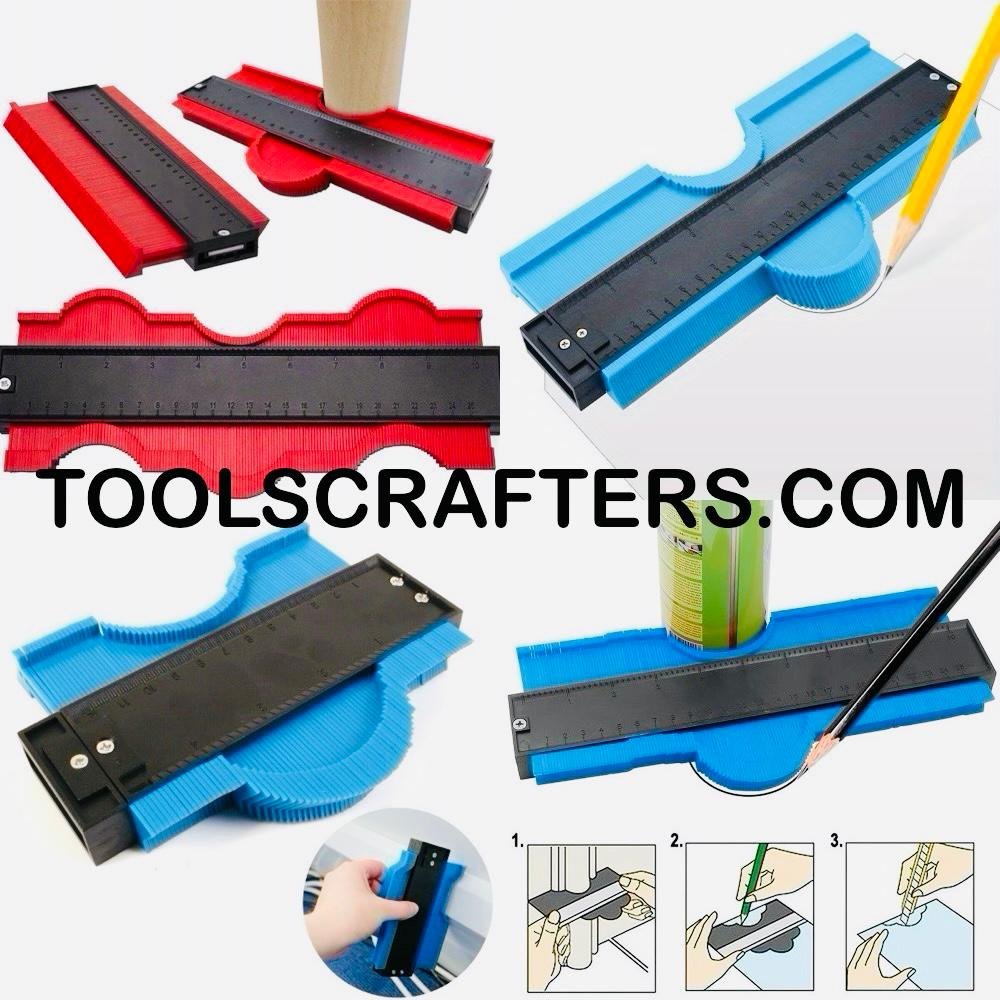
A contour gauge duplicator helps copy irregular shapes quickly for woodworking, tile installation, flooring, and DIY projects.
If you’ve ever tried to fit trim around a corner, cut flooring around a pipe, or scribe tile to match an odd edge, you know how frustrating it is to eyeball an irregular shape. A contour gauge duplicator solves that with a simple mechanical trick instead of guesswork. Here’s what the tool is, what its features do, and what to weigh before buying one.
What Is a Contour Gauge?
A contour gauge is a hand tool made up of a row of thin teeth or pins held inside a frame. When you press the tooth end against an object, each pin slides independently and settles against the surface it touches. The result is a physical copy of that object’s profile, which you can then lift away and trace onto another material.
It’s a category of tool, not a single design — you’ll find versions in different widths, colors, and tooth densities. The core idea stays the same across all of them: capture a shape mechanically instead of measuring it by hand.
Product Overview
Based on the images and specifications provided, this is a contour gauge duplicator with a plastic body, also sold under names like profile tool, shape duplicator, and profile measuring tool.
Visually, it has a central black frame with rows of teeth extending out on either side. A ruler is printed along the frame, and small screws are visible holding the tooth assembly together. The images show it in more than one color, including red and a blue-green teal.
Details like overall size, tooth count, and weight are not specified.
| Feature | Details |
|---|---|
| Product Type | Contour Gauge Duplicator |
| Material | Plastic |
| Applications | Woodworking, Tile, Flooring, DIY |
| Locking Feature | Visible on some versions shown |
Design and Features
Each part of the tool serves a specific purpose on the job site:
Independently sliding teeth — Each pin moves on its own, letting the gauge follow curves, notches, and uneven edges instead of only straight lines.
Printed ruler markings — Measurements right on the frame mean you can check a rough dimension without reaching for a tape measure.
Visible mounting screws — The tooth bank appears assembled rather than molded as one piece, which is common in this type of tool.
Locking tab — Shown on the blue version, a lock like this is meant to hold the captured shape steady while you carry the gauge to your tracing surface.
Compact frame — The narrow, elongated shape is easy to hold with one hand while pressing the teeth against a surface with the other.
Common Applications
The product images show the gauge being used in several scenarios: tracing shapes for woodworking layouts, fitting tile around edges and obstacles, marking laminate flooring where it meets a wall or pipe, general carpentry and trim work, measuring inside corners, and copying the profile of round or irregular objects like a pipe or a helmet-shaped item shown in the listing photos.
It’s a tool that shows up across several trades rather than being built for just one job.
How to Use It
The instructions shown in the product images break the process down into a few steps:
1. Press the tooth end of the gauge firmly against the edge of the object.
2. Let the pins slide until they settle into the shape.
3. Lift the gauge away carefully, keeping the captured profile intact.
4. Trace the outline onto your material with a pencil or pen.
5. Cut along the traced line.
This sequence reflects what’s shown in the manufacturer’s own images, not independent testing on our end.
Pros
– Copies irregular shapes without manual measuring or math
– Reusable across different projects and materials
– Simple to operate — press, lift, trace
– Compact enough to carry in a tool bag or pouch
Cons
– Plastic construction; long-term durability is not specified
– The captured shape can shift if the gauge is bumped or handled roughly before tracing
– Limited to the width of the gauge itself, so very wide profiles need multiple passes
– Not every version includes a locking mechanism
Buying Guide
A few practical questions are worth asking before buying:
How wide are the profiles you typically work with? A narrow gauge means repositioning and re-tracing across a wide surface.
Do you need a locking mechanism? If you’re moving the gauge any distance before tracing, a lock helps keep the pins from shifting.
Will you use the ruler markings often? If you already carry a tape measure, this feature may matter less.
Is plastic construction acceptable for your use? Some contour gauges use metal teeth instead. Consider how often you’ll use it and how it’ll be stored.
Occasional tool or regular part of your kit? That answer can guide how much you want to spend.
This isn’t a recommendation for one version over another — it’s meant to help you match the tool to your own project needs.
Maintenance and Care
Basic care helps keep the tool functional over time. Wipe the plastic body down after use, especially if it’s picked up dust, adhesive, or grout. Avoid forcing the teeth past their natural range of motion, since that’s the part most likely to wear. Store the gauge flat rather than bent, and keep it away from prolonged heat, which can warp plastic. These are general good-practice suggestions, not manufacturer-specified instructions.
How We Evaluated This Product
This article is based on the product images supplied, the listed manufacturer specifications, and general woodworking and DIY trade knowledge. No hands-on testing was performed for this piece, and no claims about accuracy, durability, or long-term performance are made beyond what is directly visible in the images or stated in the specifications.
FAQ
What is a contour gauge duplicator used for?
It’s used to copy the profile of an irregular shape — like a corner, pipe, or molding — so that profile can be transferred onto another material for cutting.
Can it be used for tile and flooring work?
Yes, based on the applications listed and shown in the product images, tile installation and laminate flooring are both included.
Does the shape stay locked in after tracing?
Some versions include a locking tab to help hold the shape in place. Not every version shown has this feature.
What materials can it trace shapes from?
The images show it being used on wood, tile, pipes, and rounded objects, suggesting it works on a range of hard surfaces.
Does it work on both curves and angles?
The sliding-teeth design is meant to handle both, since each pin adjusts independently to whatever surface it touches.
Final Thoughts
A contour gauge duplicator is a straightforward tool built around one job: copying an irregular shape so you don’t have to measure it by hand. It shows up in woodworking, tiling, and flooring work because the same basic problem—matching a cut to an uneven surface—comes up in all three trades. If you’re looking for a contour gauge duplicator for DIY or professional projects, compare the available features and choose one that matches your typical work. Like any plastic tool, it has real limitations worth knowing before you buy, but its core function remains useful across a wide range of projects.
Affiliate Disclosure
This article may contain affiliate links. If you make a purchase through one of these links, we may earn a small commission at no additional cost to you.
About TOOLSCRAFTERS
TOOLSCRAFTERS covers tools, techniques, and buying guidance for woodworkers, tradespeople, and DIY enthusiasts. Our content is written to help readers make informed decisions based on available product information and practical trade knowledge.